
Hungary's reckoning with Orban's corrupt system picks up speed with high-profile arrests
Key Takeaways
- Two former ministers, Balazs Hanko and Miklos Sesztak, were arrested on corruption charges after their parliamentary immunity was lifted.
- Hanko is accused of misallocating 50 million euros in public funds, while Sesztak allegedly accepted 30 million euros in bribes.
- Prime Minister Peter Magyar voluntarily lifted his own immunity to face charges, aiming to set a standard of equal accountability.
OPA WIRE, Sep 30 (OPA) — The Hungarian government has initiated a significant phase in its pledge to dismantle the legacy of Viktor Orban, marking a turning point in what Prime Minister Peter Magyar calls the liquidation of a 'mafia state.' Launched in June 2026, 'Operation Purgatory' aims to recover embezzled assets and hold officials accountable for years of systemic corruption. While initial efforts were criticized for being slow, the arrest of two high-profile lawmakers this week signals that the administration is finally moving beyond rhetoric toward substantive legal action.
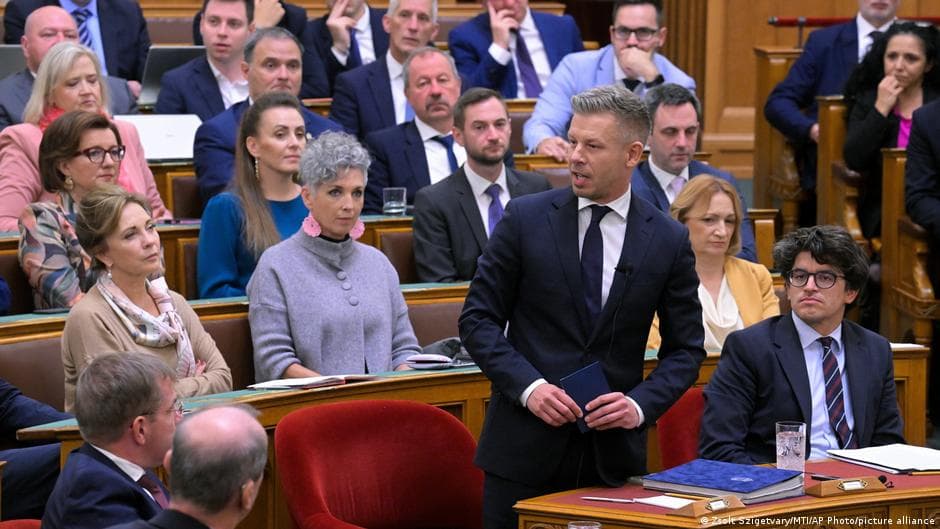
Legal proceedings intensified on Monday when the Tisza Party utilized its parliamentary majority to strip the immunity of Balazs Hanko, former minister for culture and innovation, and Miklos Sesztak, a former development minister. Hanko is accused of unlawfully allocating 50 million euros from the National Cultural Fund for political purposes, while Sesztak faces allegations of accepting 30 million euros in bribes related to state contracts. Both figures have been placed in pretrial detention, marking the most significant crackdown on the Fidesz-KDNP network to date.
This reckoning follows years of allegations regarding the systematic enrichment of Orban's inner circle. The Fidesz party, which governed for over a decade, has long been accused of utilizing public funds to fuel election campaigns and propaganda machines. The current investigation into the 'Gold Convoy' affair and the broader misuse of state-owned enterprises like Volanbusz highlights the deep-seated nature of the corruption that the current administration is now attempting to excise through the judicial system.
The political fallout has been intense, with Fidesz lawmakers decrying the arrests as an exercise of arbitrary rule. Prime Minister Magyar, however, has sought to demonstrate transparency by voluntarily lifting his own immunity to face charges regarding a 2024 incident involving a discarded phone. By subjecting himself to the same legal standards he applies to his predecessors, Magyar aims to bolster the credibility of the judiciary, though he faces criticism for his aggressive rhetoric against the prosecutor's office.
Looking ahead, the success of 'Operation Purgatory' will depend on the independence of the courts and the ability of the government to avoid the appearance of political vengeance. While public demand for justice is high, legal experts warn that the process must remain disciplined and professional to ensure long-term stability. Whether this marks a genuine transition to a rule-of-law state or merely a shift in power dynamics remains the central question for Hungary's political future.
Subscribe to the Global Briefing
Receive our flagship executive dispatch every morning. Essential geopolitical analysis, financial benchmarks, and breaking world events delivered to your inbox.
Mohammad Karamali
Verified Wire ContributorSenior correspondent covering geopolitics, regional developments, and strategic international affairs for OPA News (Optimum Public Affairs).
Related Stories & Follow-ups
Editorial Wire


Reader Discussion
Leave a Comment
0 Comments
Owner
Editorial Oversight & Machine-Assisted Reporting
Human-in-the-Loop VerifiedEditorial Oversight & Machine-Assisted Reporting: This dispatch was synthesized and localized via OPA automated intelligence under continuous human editorial supervision.
Wire Source
This report was synthesized from DW English under journalistic fair use.