
Estonia blames Russia for arson attack on defense company
Key Takeaways
- Estonia officially attributed the August 15 arson attack at Milrem Robotics to Russian special services.
- Three suspects were arrested in Latvia and extradited to Estonia in connection with the sabotage.
- NATO and EU leaders condemned the attack as a reckless escalation of Russia's hybrid warfare campaign.
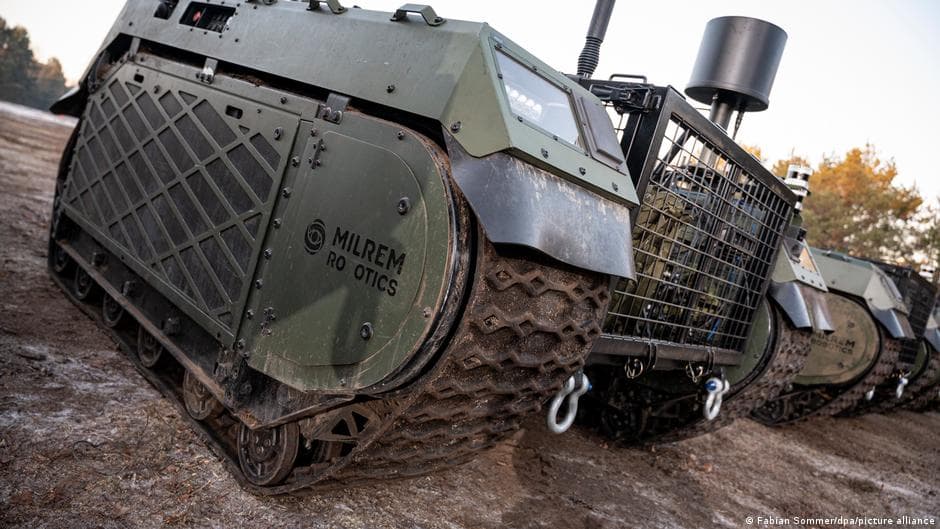
OPA WIRE, Sep 30 (OPA) — NATO and European Union leaders have rallied behind Estonia following the Baltic nation's formal accusation that Russia orchestrated an arson attack in Tallinn. Estonian Foreign Minister Margus Tsahkna confirmed that a government investigation into the August 15 incident at the facility of Milrem Robotics, a firm specializing in ground drones for the Ukrainian military, concluded that the sabotage was ordered by Russian special services. The Estonian government has already arrested the perpetrators and summoned the Russian ambassador to protest what they describe as a deliberate act of hybrid warfare.
Minister Tsahkna stated that the attack was part of a broader, reckless campaign by Moscow aimed at intimidating European allies and undermining support for Ukraine. NATO Secretary-General Mark Rutte echoed these sentiments, condemning the act as a manifestation of Russia's hostile actions against the alliance. While the Kremlin dismissed the findings as baseless and disconnected from reality, Estonian authorities maintain that the evidence is definitive. Three suspects were apprehended in Latvia and subsequently extradited to Estonia to face justice for their roles in the operation.
Estonia, a nation of 1.3 million people sharing a border with Russia, has long been a vocal critic of Moscow's regional policies. The August 15 fire occurred at a building utilized by Milrem Robotics, a company whose technology is vital to the defense of Ukraine. Although the fire caused no injuries, the incident represents a significant escalation in the security environment of the Baltic region. The swift response by Estonian authorities and the subsequent arrest of the suspects in Latvia highlight the cross-border nature of the security challenges currently facing the Baltic states.
International reactions have been swift and decisive, with leaders across Europe condemning the sabotage. German Foreign Minister Johann Wadephul pledged full solidarity, asserting that such hostilities would only strengthen NATO's resolve. French President Emmanuel Macron labeled the event a dangerous escalation, while European Commission officials emphasized that Moscow’s attempts to weaken European unity through intimidation would fail. Lithuanian and Latvian officials also expressed strong support, noting that the attack serves as clear evidence that Russia's aggressive activities extend far beyond the active front lines in Ukraine.
Looking ahead, the incident is expected to trigger a significant shift in how NATO members approach internal security and the protection of defense-related infrastructure. Analysts suggest that this act of sabotage will likely lead to increased intelligence sharing and tighter security protocols across the Baltic and Nordic regions. As Russia continues its hybrid warfare tactics, the alliance is under pressure to demonstrate that such provocations will not deter its commitment to Ukraine. The future of European security will increasingly depend on the ability of member states to counter these clandestine threats while maintaining a unified political front against external aggression.
Subscribe to the Global Briefing
Receive our flagship executive dispatch every morning. Essential geopolitical analysis, financial benchmarks, and breaking world events delivered to your inbox.
Mohammad Karamali
Verified Wire ContributorSenior correspondent covering geopolitics, regional developments, and strategic international affairs for OPA News (Optimum Public Affairs).
Related Stories & Follow-ups
Editorial Wire


Reader Discussion
Leave a Comment
0 Comments
Owner
Editorial Oversight & Machine-Assisted Reporting
Human-in-the-Loop VerifiedEditorial Oversight & Machine-Assisted Reporting: This dispatch was synthesized and localized via OPA automated intelligence under continuous human editorial supervision.
Wire Source
This report was synthesized from DW English under journalistic fair use.