
Girl has multiple surgeries to control infections after strike in Gaza
Key Takeaways
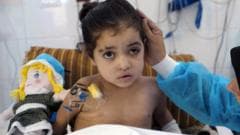
- Six-year-old Raseel al-Balawi has undergone over 20 surgeries following an air strike in the al-Mawasi camp.
- The Israeli military claims it has no record of the specific strike and expressed regret for civilian harm.
- BBC investigations highlight the collapse of Gaza's healthcare system, making post-operative care nearly impossible.
OPA WIRE, Sep 30 (OPA) — Six-year-old Raseel al-Balawi, a young girl from Gaza, has endured a harrowing medical journey following a devastating air strike in late July. Witnesses report that the tent where she was sheltering in the al-Mawasi camp was struck by an Israeli helicopter, leaving her with severe injuries that have required more than 20 surgeries to date. Her case has become a poignant symbol of the ongoing humanitarian crisis, as medical professionals struggle to manage life-threatening infections in a region where basic surgical supplies and sterile environments have become increasingly scarce.
While Raseel fights for her recovery, the official response from the Israeli military remains one of denial regarding the specific incident. The military stated it has no record of the attack on the al-Mawasi camp and emphasized that it "regrets any harm to civilians" during its operations. This disconnect between the accounts of survivors on the ground and the military's operational records highlights the immense difficulty in verifying incidents within the conflict zone, where the intensity of bombardment often prevents formal investigations and documentation of individual strikes.
This tragedy is not an isolated event but rather a reflection of the broader collapse of Gaza's healthcare infrastructure. BBC Eye Investigations followed Raseel throughout the summer, documenting the daily struggle of families living in makeshift camps amidst the near-total destruction of hospitals and clinics. The history of the conflict in Gaza has seen repeated cycles of violence, but the current scale of infrastructure damage has left medical staff operating in conditions that were previously unimaginable, often performing complex procedures without adequate anesthesia or antibiotics.
The ramifications of this situation extend far beyond Raseel's immediate medical needs, affecting thousands of children who are currently trapped in the crossfire. The inability to maintain sanitary conditions in overcrowded camps has led to a surge in preventable infections and secondary health crises. International aid organizations and human rights groups have repeatedly warned that the lack of functional medical facilities is creating a secondary catastrophe, where injuries that would be treatable in a stable environment are becoming fatal due to the lack of post-operative care.
Looking ahead, the outlook for children like Raseel remains grim as the ceasefire negotiations falter and the bombardment continues. Experts warn that even if the active fighting were to cease immediately, the long-term health consequences for a generation of children exposed to such trauma and lack of medical care will be profound. The destruction of Gaza's medical system means that the recovery process will take years, if not decades, requiring a massive international effort to rebuild the basic infrastructure necessary to sustain life and provide essential healthcare to the population.
Subscribe to the Global Briefing
Receive our flagship executive dispatch every morning. Essential geopolitical analysis, financial benchmarks, and breaking world events delivered to your inbox.
Mohammad Karamali
Verified Wire ContributorSenior correspondent covering geopolitics, regional developments, and strategic international affairs for OPA News (Optimum Public Affairs).
Related Stories & Follow-ups
Editorial Wire


Reader Discussion
Leave a Comment
0 Comments
Owner
Editorial Oversight & Machine-Assisted Reporting
Human-in-the-Loop VerifiedEditorial Oversight & Machine-Assisted Reporting: This dispatch was synthesized and localized via OPA automated intelligence under continuous human editorial supervision.
Wire Source
This report was synthesized from BBC World under journalistic fair use.