
South Korea embraces shark slowly circling a canal in the country's biggest port city
Key Takeaways
- Approximately 600,000 visitors have visited Busan's North Port to see the shark since September 19.
- The shark measures 3.5 meters (11.5 feet) and has been trapped in the canal for nearly two weeks.
- Authorities are planning a new rescue attempt using a 50-meter specialized net to guide the shark to open water.
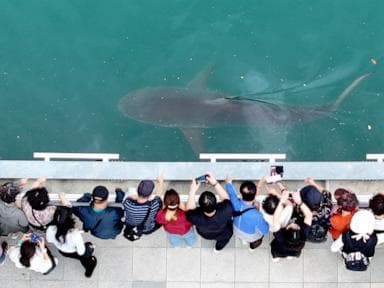
OPA WIRE, Sep 30 (OPA) — A massive gray shark, affectionately named Bukangi, has transformed from a potential maritime hazard into an unlikely honorary mascot in Busan, South Korea’s largest port city. The shark has been trapped within a narrow canal for nearly two weeks, drawing immense public fascination since it was first sighted on September 18. While authorities initially viewed the presence of the 3.5-meter predator as a logistical challenge, the creature has since become a central figure in the city's cultural landscape, captivating locals and tourists alike as it continues to circle the confined waterway.
City officials have reported that approximately 600,000 visitors have flocked to the North Port to catch a glimpse of the shark, with nearly 500,000 of those arrivals occurring during the recent Chuseok holiday. Busan Mayor Chun Jae-soo officially acknowledged the phenomenon, stating, "Bukangi has naturally become a new part of Busan’s story with the interest and love of the city’s people." Despite the public affection, the primary concern remains the animal's welfare, as experts emphasize that the canal is not a suitable long-term habitat for a shark of this size.
Historically, the North Port has been a hub of industrial activity, but the arrival of Bukangi has shifted the focus toward wildlife management and public safety. The shark’s presence has triggered a complex rescue operation involving state-run agencies and local maritime authorities. Previous attempts to herd the shark out using water sprays from five vessels proved unsuccessful, as the animal repeatedly evaded the boats by diving or swimming past them, demonstrating a level of agility that surprised the rescue crews.
The ramifications of this event extend beyond simple tourism, highlighting the intersection of urban development and marine conservation. While the shark has boosted local morale and economic activity, the potential for a negative encounter or the animal's health decline remains a constant worry for officials. The situation has forced the city to balance its role as a bustling port with the responsibilities of protecting marine life, leading to a surge in public discourse regarding how to handle such unexpected wildlife incursions in the future.
Looking ahead, authorities are preparing a more sophisticated rescue strategy scheduled for Friday. The National Institute of Fisheries Science is currently constructing a specialized net, measuring at least 50 meters in length, designed to effectively channel the shark toward the open sea. Kim Won-ho, a city official, noted that while the shark shows no immediate signs of illness, the release remains a critical priority. Experts remain cautiously optimistic that this new method will succeed, ensuring the safety of both the public and the shark as it returns to its natural habitat.
Subscribe to the Global Briefing
Receive our flagship executive dispatch every morning. Essential geopolitical analysis, financial benchmarks, and breaking world events delivered to your inbox.
Mohammad Karamali
Verified Wire ContributorSenior correspondent covering geopolitics, regional developments, and strategic international affairs for OPA News (Optimum Public Affairs).
Related Stories & Follow-ups
Editorial Wire


Reader Discussion
Leave a Comment
0 Comments
Owner
Editorial Oversight & Machine-Assisted Reporting
Human-in-the-Loop VerifiedEditorial Oversight & Machine-Assisted Reporting: This dispatch was synthesized and localized via OPA automated intelligence under continuous human editorial supervision.
Wire Source
This report was synthesized from ABC under journalistic fair use.