
US Withdrawal from Iraq: A Critical Test for the New Government and Iran-Backed Militias
Key Takeaways
- The U.S.-led coalition officially ended its mission in Iraq on September 30, 2024, marking the end of 'Operation Inherent Resolve'.
- The Iraqi government has extended the deadline for the disarmament and integration of militias until June 2027 due to resistance from powerful factions.
- Kurdish leaders express deep concern over the loss of U.S. intelligence and air defense systems, fearing increased vulnerability to Iranian-backed drone and missile attacks.
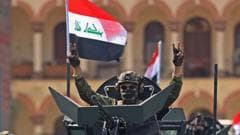
OPA WIRE, Oct 1 (OPA) — Twenty-three years after the U.S. invasion of Iraq and twelve years since the return of American forces to combat ISIS, the final U.S.-led coalition troops have officially departed Iraq as of September 30. The Iraqi government has framed this historic withdrawal as the 'completion of national sovereignty,' marking a definitive end to the 'Operation Inherent Resolve' mission. While the departure concludes a long and costly military presence, it has triggered profound uncertainty regarding the nation's security architecture, the potential for expanded Iranian influence, and the precarious future of the Kurdish region.
Prime Minister Ali Zaid has declared a four-day national holiday to celebrate this 'Day of National Sovereignty,' framing the event as a new chapter for the country. Despite the withdrawal, Washington maintains that cooperation will continue through limited training and intelligence sharing. However, the metrics of security remain concerning; officials warn that the loss of U.S. aerial surveillance, advanced radar systems, and real-time intelligence gathering leaves a significant gap that local forces, including the Peshmerga, are currently ill-equipped to fill without external support.
Historically, the U.S. presence served as a buffer against both the resurgence of ISIS and the unchecked expansion of regional proxies. With the U.S. gone, the Iraqi state faces the daunting task of centralizing military power. The government had initially planned to integrate or disarm various militias by the September 30 deadline, but that timeline has been pushed to June 2027 due to fierce resistance from powerful factions like Kata'ib Hezbollah and Harakat al-Nujaba, which continue to operate outside state control.
The ramifications of this power vacuum are felt most acutely in the Kurdistan Region. Kurdish leaders fear that without U.S. military oversight, they are increasingly vulnerable to drone and missile strikes from Iran and its proxies. Furthermore, the political landscape is complicated by demands from these militias to dissolve the Peshmerga forces, a move Kurdish officials reject, citing their constitutional status. The potential for internal conflict is rising as these groups leverage the U.S. exit to demand the expulsion of Turkish forces and other anti-Iranian Kurdish factions.
Looking ahead, the stability of Iraq hinges on the government's ability to balance its delicate relationships with Washington and Tehran. Experts argue that the primary test for the new administration is whether it can assert true sovereignty or if the vacuum will be filled by Iranian-backed entities and a resurgent ISIS. As the region enters this post-American era, the risk of Iraq becoming a theater for proxy confrontations remains high, challenging the government to maintain internal order without the stabilizing influence of international military partners.
Subscribe to the Global Briefing
Receive our flagship executive dispatch every morning. Essential geopolitical analysis, financial benchmarks, and breaking world events delivered to your inbox.
Mohammad Karamali
Verified Wire ContributorSenior correspondent covering geopolitics, regional developments, and strategic international affairs for OPA News (Optimum Public Affairs).
Related Stories & Follow-ups
Editorial Wire


Reader Discussion
Leave a Comment
0 Comments
Owner
Editorial Oversight & Machine-Assisted Reporting
Human-in-the-Loop VerifiedEditorial Oversight & Machine-Assisted Reporting: This dispatch was synthesized and localized via OPA automated intelligence under continuous human editorial supervision.
Wire Source
This report was synthesized from BBC Persian under journalistic fair use.