
New Tigray crisis: Where are the mediators to broker peace in Ethiopia?
Key Takeaways
- A new coalition of diverse armed groups has formed with the explicit goal of toppling the Ethiopian federal government.
- The 2022 Pretoria Peace Agreement failed due to the exclusion of key actors like Eritrea, Fano militias, and TPLF hardliners.
- Humanitarian conditions are worsening as civilians face displacement, drone strikes, and the loss of essential infrastructure.
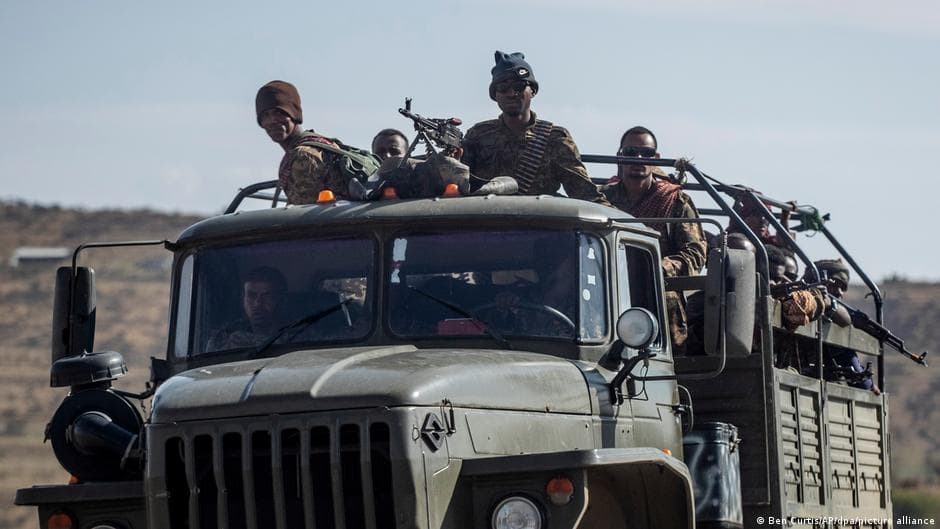
OPA WIRE, Oct 2 (OPA) — Just four years after a landmark peace deal officially halted the devastating Tigray war, fighting has escalated once again in northern Ethiopia. In recent weeks, several armed groups that were previously bitter enemies have formed a strategic alliance with the explicit goal of toppling Prime Minister Abiy Ahmed’s federal government. This resurgence of violence marks a volatile shift in the region, raising significant concerns about the stability of the Horn of Africa as external actors are increasingly accused of meddling to serve their own geopolitical interests.
Experts and analysts point to a failure in the 2022 Pretoria Peace Agreement, which ended the initial two-year conflict that claimed hundreds of thousands of lives. Negash Mohammed, a journalist specializing in the region, argues that the deal collapsed because it neglected key stakeholders, including Eritrea, the Fano militias of Amhara, and hardliners within the Tigray People's Liberation Front (TPLF). Patricia Rodrigues of Control Risks notes that while the current rebel coordination is alarming, the federal government’s decision to forcibly disarm groups rather than address their grievances has only served to aggravate existing tensions.
Historically, the conflict was defined by the struggle between the federal government and the TPLF. However, the current landscape is far more fragmented. The new coalition includes the Oromo Liberation Army, factions of the Ogaden National Liberation Front, and various ethnic militant groups from Afar and Benishangul-Gumuz. Eritrea, once an ally of Addis Ababa, is now suspected of providing support to these rebel factions. This shifting web of alliances complicates the possibility of a unified peace process, as the groups involved possess vastly different political agendas and ethnic constituencies.
For the civilian population, the consequences are dire. Many people remain in makeshift internally displaced persons (IDP) camps, unable to return home since the 2020 outbreak of hostilities. Reports indicate that drone strikes are hitting civilian areas, while rebel groups are allegedly utilizing schools and clinics for military purposes. With telecommunications cut, electricity disrupted, and flights to major cities like Lalibela suspended, the humanitarian situation is deteriorating rapidly, proving that the official assurances of civilian protection are currently failing to materialize in practice.
Looking ahead, the prospects for mediation appear bleak. While the UN has dispatched envoys to engage with regional powers, analysts suggest that meaningful negotiations will not succeed until the warring parties realize that violence is an ineffective tool for achieving their political objectives. International leverage has also waned, particularly after the United States lifted sanctions that were previously used to pressure combatants. Experts predict that while the fighting will likely remain geographically contained to northern Ethiopia, the lack of a cohesive diplomatic strategy ensures that instability will persist for the foreseeable future.
Subscribe to the Global Briefing
Receive our flagship executive dispatch every morning. Essential geopolitical analysis, financial benchmarks, and breaking world events delivered to your inbox.
Mohammad Karamali
Verified Wire ContributorSenior correspondent covering geopolitics, regional developments, and strategic international affairs for OPA News (Optimum Public Affairs).
Related Stories & Follow-ups
Editorial Wire


Reader Discussion
Leave a Comment
0 Comments
Owner
Editorial Oversight & Machine-Assisted Reporting
Human-in-the-Loop VerifiedEditorial Oversight & Machine-Assisted Reporting: This dispatch was synthesized and localized via OPA automated intelligence under continuous human editorial supervision.
Wire Source
This report was synthesized from DW English under journalistic fair use.