
The Lula-Bolsonaro Rivalry: Brazil's Election and International Implications
Key Takeaways
- Brazil is the world's fifth-largest nation, holding critical global reserves of raw materials, water, and agricultural commodities.
- The election presents a binary choice between Lula's multilateral diplomacy and Flavio Bolsonaro's proposed US-aligned conservative coalition.
- Economic dependence on China, particularly in the agricultural sector, acts as a structural check against radical shifts in foreign policy.
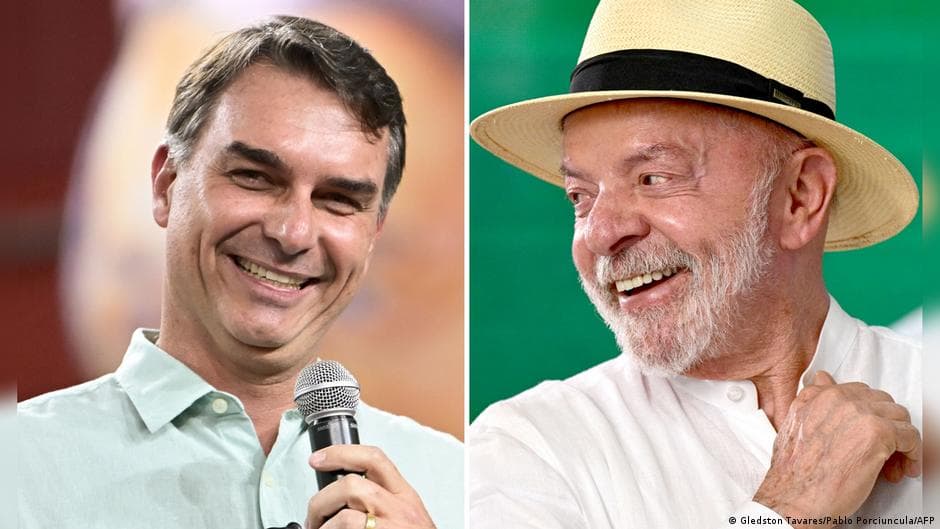
OPA WIRE, Oct 2 (OPA) — Brazilian President Luiz Inacio Lula da Silva delivered a sharp message at the UN General Assembly in New York, declaring that Brazil is no one's backyard. This statement was a direct challenge to former US President Donald Trump, who has frequently aligned himself with Brazil's right-wing factions and the Bolsonaro family. As the nation approaches the upcoming October 4th presidential election, the contest between incumbent Lula and Flavio Bolsonaro, the eldest son of former leader Jair Bolsonaro, has captured global attention. The race is currently deadlocked in polls, highlighting a deep ideological divide in the world's fifth-largest nation, a country rich in raw materials, water resources, and agricultural output.
Metrics from current polling suggest a razor-thin margin, with both candidates vying for the support of a polarized electorate. While Lula maintains his status as a veteran leftist icon in South America, Flavio Bolsonaro represents a burgeoning right-wing movement aligned with Trump’s regional influence. Experts note that while Lula has managed to maintain a functional, if tense, relationship with Trump, there are significant concerns regarding the inexperience of the younger Bolsonaro. Diplomat Rubens Ricupero remarked that while Lula possesses the diplomatic gravitas to navigate international pressures, Flavio Bolsonaro’s lack of experience could lead to unpredictable policy shifts that might destabilize Brazil’s established foreign relations.
Historically, Brazilian elections have been dominated by domestic issues, with foreign policy rarely swaying voters. However, this cycle is different due to the looming question of Brazil’s alignment with the United States. Under the 'Continental Shield' initiative, Trump seeks to bolster US economic and military dominance in Latin America while curbing Chinese influence. Brazil, which has long prioritized multilateralism and maintained China as its primary trading partner, now finds itself at a crossroads. The choice between Lula’s balanced diplomacy and the younger Bolsonaro’s proposed conservative alliance with Washington represents a fundamental shift in the country's geopolitical trajectory.
The ramifications of this election extend far beyond Brazil’s borders, particularly regarding the BRICS coalition and environmental policy. Flavio Bolsonaro has openly questioned Brazil’s continued membership in BRICS, labeling it a tool for anti-American sentiment, and has expressed skepticism toward efforts to de-dollarize global trade. Such a pivot could alienate Beijing, though analysts like Leonardo Paz from the Getulio Vargas Foundation argue that economic realities—specifically the dependence of Brazil’s massive agricultural sector on Chinese markets—will likely force any administration to moderate its rhetoric, much like the pragmatic shift seen in Argentina under Javier Milei.
Looking ahead, experts suggest that regardless of the winner, Brazil’s ability to act as a global power remains constrained by its lack of significant military and financial leverage. Nevertheless, the country remains a pivotal voice for the Global South, particularly in climate negotiations. Lula’s focus on environmental protection, bolstered by figures like Marina Silva, contrasts sharply with the Bolsonaro family’s history of environmental deregulation. As the world watches, the outcome will determine whether Brazil continues its path as a multilateral bridge-builder or pivots toward a rigid, US-centric ideological alignment that could jeopardize key trade agreements with the European Union.
Subscribe to the Global Briefing
Receive our flagship executive dispatch every morning. Essential geopolitical analysis, financial benchmarks, and breaking world events delivered to your inbox.
Mohammad Karamali
Verified Wire ContributorSenior correspondent covering geopolitics, regional developments, and strategic international affairs for OPA News (Optimum Public Affairs).
Related Stories & Follow-ups
Editorial Wire


Reader Discussion
Leave a Comment
0 Comments
Owner
Editorial Oversight & Machine-Assisted Reporting
Human-in-the-Loop VerifiedEditorial Oversight & Machine-Assisted Reporting: This dispatch was synthesized and localized via OPA automated intelligence under continuous human editorial supervision.
Wire Source
This report was synthesized from DW Persian under journalistic fair use.