
South Korea’s military says North Korea fired projectile toward its eastern waters
Key Takeaways
- North Korea fired a ballistic missile from the Wonsan area that traveled 700 kilometers.
- The launch follows heightened border tensions, including land mine blasts that injured three South Korean soldiers.
- Pyongyang has officially declared South Korea a permanent adversary, abandoning previous reconciliation goals.
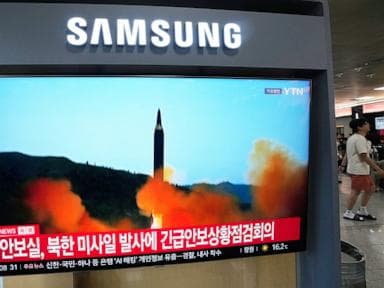
OPA WIRE, Oct 3 (OPA) — North Korea launched a ballistic missile toward its eastern waters on Saturday, marking a significant escalation in regional tensions. The South Korean Joint Chiefs of Staff reported that the projectile was fired from the coastal Wonsan area and traveled approximately 700 kilometers. This latest provocation follows a series of recent border incidents, including land mine blasts that resulted in injuries to three South Korean soldiers, further straining the fragile relationship between the two nations.
South Korean military officials confirmed the flight distance of 700 kilometers, noting that they are conducting a joint analysis with U.S. intelligence to determine the specific missile type. Japan’s Defense Ministry reported that the missile landed outside its exclusive economic zone, though they remain on high alert. Seoul’s presidential national security office issued a stern condemnation, labeling the launch a violation of U.N. Security Council sanctions and a serious threat to regional stability, while demanding an immediate cessation of such activities.
This launch occurs against a backdrop of deteriorating inter-Korean relations. In 2024, North Korean leader Kim Jong Un officially abandoned the long-standing goal of peaceful reconciliation, declaring South Korea a permanent adversary. The border region has seen increased militarization, with Pyongyang installing anti-tank barriers and land mines. Kim Yo Jong, the leader’s sister, recently dismissed Seoul’s demands for an apology regarding the September 21 land mine incident as pathetic, signaling a permanent shift toward cutting ties with the South.
The ramifications of this launch extend beyond the Korean Peninsula, involving major global powers. The United Nations Command and South Korean authorities have attributed the recent border explosions to North Korean sabotage, a claim Pyongyang vehemently denies. As North Korea continues to strengthen its military alliance with Russia—providing troops and munitions for the war in Ukraine—the international community faces a complex security challenge. The move effectively isolates Pyongyang further from diplomatic avenues, complicating potential future negotiations.
Looking ahead, experts suggest that North Korea’s strategy is designed to overwhelm regional missile defenses while leveraging its nuclear arsenal to gain geopolitical leverage. With diplomacy currently stalled and Washington’s outreach rebuffed, the region remains in a precarious state of high-intensity posturing. Analysts warn that without a fundamental shift in Pyongyang’s hostile policy, the cycle of missile tests and border provocations is likely to continue, increasing the risk of miscalculation and accidental conflict in the coming months.
Subscribe to the Global Briefing
Receive our flagship executive dispatch every morning. Essential geopolitical analysis, financial benchmarks, and breaking world events delivered to your inbox.
Mohammad Karamali
Verified Wire ContributorSenior correspondent covering geopolitics, regional developments, and strategic international affairs for OPA News (Optimum Public Affairs).
Related Stories & Follow-ups
Editorial Wire


Reader Discussion
Leave a Comment
0 Comments
Owner
Editorial Oversight & Machine-Assisted Reporting
Human-in-the-Loop VerifiedEditorial Oversight & Machine-Assisted Reporting: This dispatch was synthesized and localized via OPA automated intelligence under continuous human editorial supervision.
Wire Source
This report was synthesized from ABC under journalistic fair use.