
US-Led Meeting with Select European Allies Sparks Concerns Over NATO Division
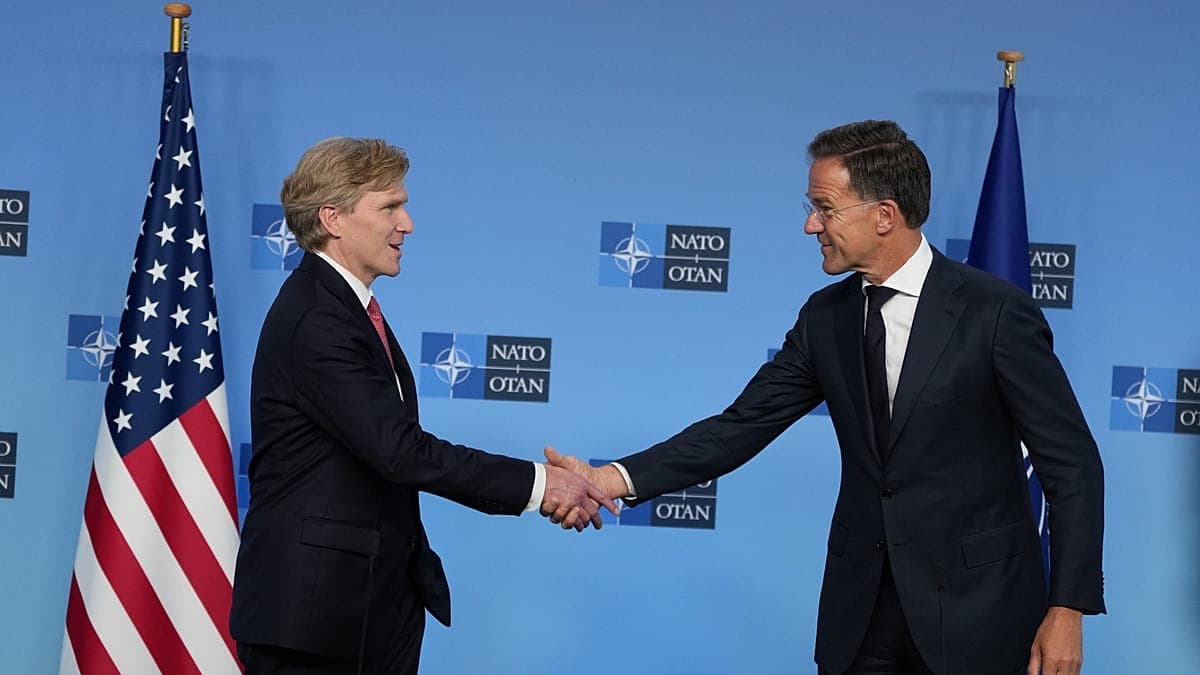
Key Takeaways
- US Undersecretary of Defense Elbridge Colby met with the Bergen Group—Sweden, Finland, Poland, Germany, and the Netherlands—excluding the UK, France, and the Baltics.
- The talks focused on 'NATO 3.0', a model pushing Europe to assume the primary burden for conventional defense while the US scales back capabilities.
- Frontline Baltic nations, which lead NATO in defense spending as a share of GDP, were excluded following US pressure to tone down rhetoric against Russia.
OPA WIRE, Oct 6 (OPA) — Talks held in Poland between US Undersecretary of Defense Elbridge Colby and five European nations have sparked concern among geopolitical analysts who warn the restricted format risks fracturing NATO. Known as the Bergen Group, the format brought together Sweden, Finland, Poland, Germany, and the Netherlands to discuss European defense responsibilities. However, the explicit exclusion of key allies, including the United Kingdom, France, and the frontline Baltic states, has triggered pushback across the transatlantic alliance.
Critics argue that the arrangement signals Washington is picking favorites among members of the collective defense pact. Fabrice Pothier, CEO of Rasmussen Global, warned that the approach is deeply toxic for an alliance predicated on mutual trust, suggesting it creates perceptions that the US may defend certain partners ahead of others. While NATO officials downplayed the talks as routine smaller-format diplomacy, Pothier noted that the Bergen participants were selected because they provide essential conventional mass across air, maritime, and ground domains under Washington's planned restructuring.
The discussions center on a transition toward 'NATO 3.0,' a concept requiring European nations to assume the primary burden for the continent's conventional defense while the US draws down critical capabilities, including bombers, submarines, and specialized military personnel. Observers suggest historical diplomatic frictions, including prior French and British policy disputes and Paris's promotion of strategic European military autonomy, may have influenced Washington's selective invitations, though British diplomats denied being sidelined.
The exclusion of Estonia, Latvia, and Lithuania is particularly contentious given that they are among NATO's top defense spenders relative to GDP and face persistent Russian hybrid threats. Colby reportedly urged Baltic officials earlier this year to adopt a less confrontational posture toward Moscow amid US efforts to negotiate an end to the war in Ukraine. In response to recurring airspace breaches, including a recent drone alert in Vilnius, Lithuanian authorities have extended an invitation for Colby to inspect frontline security challenges directly.
Subscribe to the Global Briefing
Receive our flagship executive dispatch every morning. Essential geopolitical analysis, financial benchmarks, and breaking world events delivered to your inbox.
Mohammad Karamali
Verified Wire ContributorSenior correspondent covering geopolitics, regional developments, and strategic international affairs for OPA News (Optimum Public Affairs).
Related Stories & Follow-ups
Editorial Wire


Reader Discussion
Leave a Comment
0 Comments
Owner
Editorial Oversight & Machine-Assisted Reporting
Human-in-the-Loop VerifiedEditorial Oversight & Machine-Assisted Reporting: This dispatch was synthesized and localized via OPA automated intelligence under continuous human editorial supervision.
Wire Source
This report was synthesized from Euro News under journalistic fair use.