
Colombia Deploys Military Task Force to Protect Infrastructure and Combat ELN Rebels
Key Takeaways
- President Abelardo de la Espriella launched Task Force Urano to combat ELN rebels and secure key fuel pipelines.
- The new policy ends previous peace negotiations, reinstating centralized joint military-police operations.
- Stolen pipeline fuel had been actively financing cocaine production and illegal mining operations across northeast Colombia.
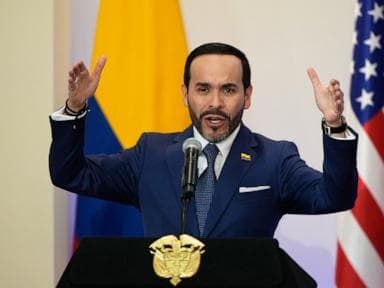
OPA WIRE, Oct 6 (OPA) — Colombian President Abelardo de la Espriella has launched a specialized military joint task force to combat rebel insurgencies and drug cartels operating in the country's northeast. The initiative, announced Monday during a ceremony in Valledupar, marks a decisive shift in Bogota's national security strategy, formally replacing prior peace negotiations with intensified military offensives.
The newly established unit, designated Task Force Urano, has been assigned the primary mission of protecting critical energy infrastructure, particularly a major pipeline connecting the Caribbean coast to an inland refinery in Barrancabermeja. De la Espriella accused the National Liberation Army (ELN), Colombia's largest remaining guerrilla group, of siphoning gasoline and diesel to bankroll illicit operations. "They use it to make cocaine, to power illegal mines and to generate income for terrorist activities," the president stated, emphasizing that the multi-branch unit will incorporate national police alongside armed forces personnel.
For nearly two decades, Colombia relied heavily on centralized joint task forces comprising army, navy, and air force assets to counter rural insurgencies. These unified commands played a pivotal role in military successes against the Revolutionary Armed Forces of Colombia (FARC) ahead of the landmark 2016 peace accord. However, the model was dismantled two years ago under former President Gustavo Petro's administration, which sought to decentralize operational command to local army officers, a policy critics argued degraded operational effectiveness.
Following his inauguration in August, the conservative leader terminated ongoing peace talks with guerrilla factions, signaling a return to hardline counterinsurgency doctrines. By reinstating coordinated joint commands overseen directly from the capital, the administration aims to dismantle the logistics networks of armed groups. "There will be no negotiations or empathy with terrorism," De la Espriella affirmed, solidifying an aggressive military posture aimed at curbing regional illicit economies.
Subscribe to the Global Briefing
Receive our flagship executive dispatch every morning. Essential geopolitical analysis, financial benchmarks, and breaking world events delivered to your inbox.
Mohammad Karamali
Verified Wire ContributorSenior correspondent covering geopolitics, regional developments, and strategic international affairs for OPA News (Optimum Public Affairs).
Related Stories & Follow-ups
Editorial Wire


Reader Discussion
Leave a Comment
0 Comments
Owner
Editorial Oversight & Machine-Assisted Reporting
Human-in-the-Loop VerifiedEditorial Oversight & Machine-Assisted Reporting: This dispatch was synthesized and localized via OPA automated intelligence under continuous human editorial supervision.
Wire Source
This report was synthesized from ABC under journalistic fair use.