
Nationwide Student Protests Erupt Across France Over Educational Neglect and Police Brutality
Key Takeaways
- Over 6,000 arrests, 215 student injuries, and 715 injured police officers have been recorded during the nationwide wave of protests.
- Major labor and teacher unions joined students protesting chronic teacher shortages, poor building conditions, and overcrowded classes.
- French political leaders are deeply divided, with the left celebrating youth activism while the right and government condemn violent rioting.
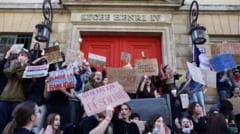
High school and university students across France have launched widespread strikes and blockades, demanding urgent investment in the national education system. Supported by major labor unions and teacher federations, demonstrators have obstructed entrances to hundreds of schools in Paris, Lyon, Marseille, and approximately 30 other cities. Adults, including parents and union organizers wearing white armbands, formed human buffers outside educational institutions to protect youth demonstrators following intense clashes with law enforcement.
Over the past week of escalating unrest, violence has resulted in injuries to 215 youths and 715 police officers, with more than 6,000 arrests recorded nationwide. Public fury spiked after a student lost a hand to an explosive blast in the northern town of Lens, while another teenager sustained a severe double jaw fracture from a tear gas canister. National Education Minister Édouard Geffroy expressed condolences to the victims, calling the events a tragedy, yet condemned what he described as violent infiltrators hijacking the movement. He noted that over 500 schools were shut down or partially disrupted and 24 suffered arson or looting.
The demonstrations began in late September in Paris before surging nationwide as students voiced anger over overcrowded classrooms, crumbling infrastructure, and severe teacher shortages. Student organizations accused riot police of using disproportionate force against minors, while Interior Minister Laurent Nuñez defended police tactics as entirely measured. Prime Minister Sébastien Lecornu offered educational reforms to appease demonstrators but firmly warned that the government would grant no concessions to street violence.
The unrest has swiftly evolved into a bitter political battleground ahead of upcoming national elections. Left-wing leader Jean-Luc Mélenchon framed the mobilization as the most potent youth uprising since May 1968, urging citizens to safeguard marching students from police abuse. Conversely, government officials and far-right leader Marine Le Pen accused radical left-wing parties of inciting orchestrated riots and weaponizing student frustration for partisan gain.
Subscribe to the Global Briefing
Receive our flagship executive dispatch every morning. Essential geopolitical analysis, financial benchmarks, and breaking world events delivered to your inbox.
Related Stories & Follow-ups
Editorial Wire World
WorldZelenskyy Claims Starlink Speed Restrictions Hamper Ukraine’s Ability to Intercept Russian Drones
 World
WorldZelenskyy Urges Action After Trump Pauses Sanctions on Russia Amid Escalating War
 World
WorldPalestinians Injured as Settler Attacks Intensify During Olive Harvest in West Bank
Reader Discussion
Leave a Comment
0 Comments
Owner
Editorial Oversight & Machine-Assisted Reporting
Human-in-the-Loop VerifiedEditorial Oversight & Machine-Assisted Reporting: This dispatch was synthesized and localized via OPA automated intelligence under continuous human editorial supervision.
Wire Source
This report was synthesized from BBC Persian under journalistic fair use.