
Murder Accusation Against U.S. Marine Sparks Outcry and Diplomatic Pressure in Japan
Key Takeaways
- A U.S. Marine accused of murder in Japan has triggered widespread public backlash and protests.
- Prime Minister Sanae Takaichi faces growing pressure to demand stricter oversight of American troops.
- The controversy revives long-standing debates regarding the U.S.-Japan Status of Forces Agreement (SOFA).
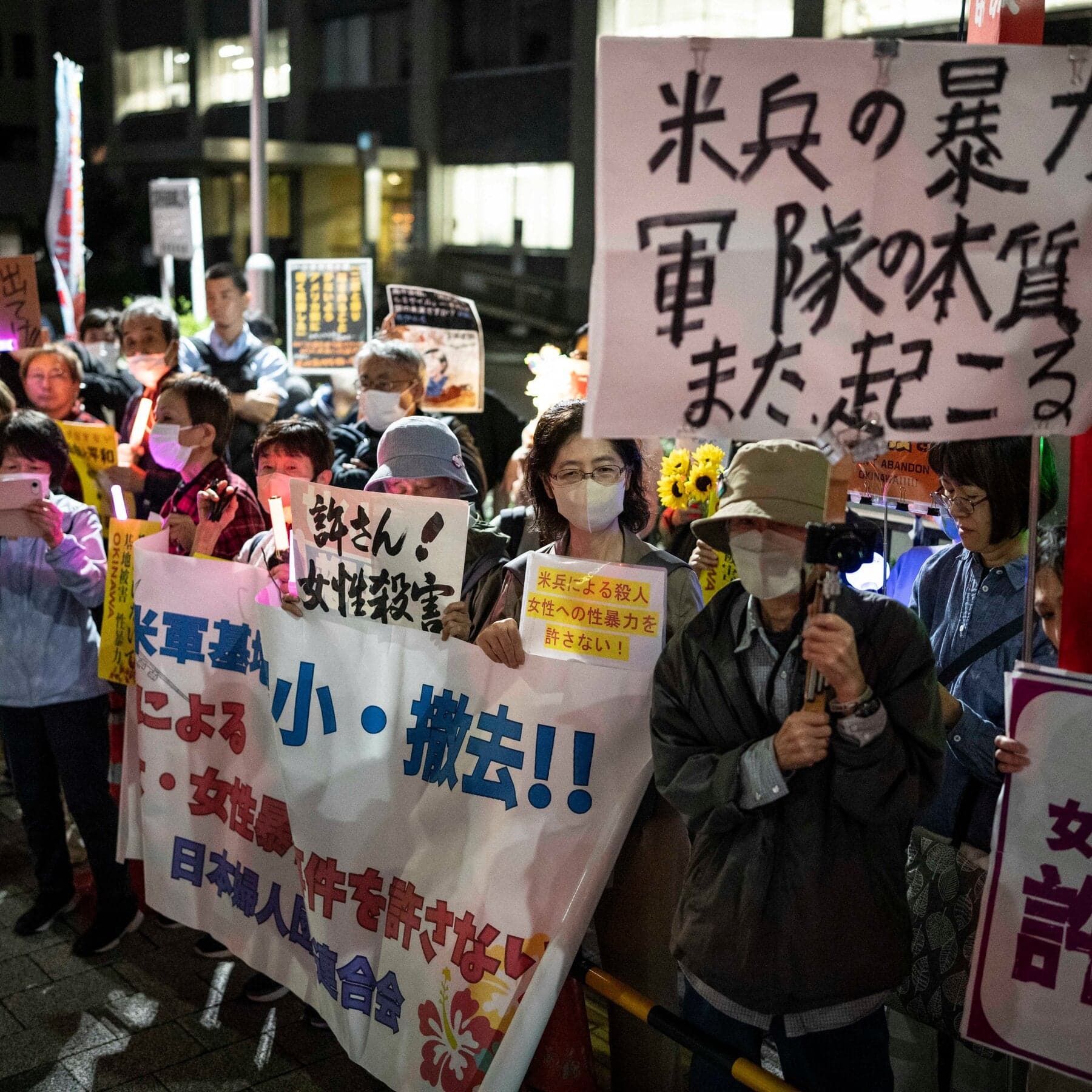
OPA WIRE, Oct 7 (OPA) — A murder case involving an active-duty U.S. Marine stationed in Japan has ignited widespread public outrage, placing fresh strain on bilateral security ties. Japanese civic groups and local officials are demanding immediate accountability and stricter jurisdiction over American military personnel. The incident has quickly escalated into a prominent political test for Japan's leadership, which faces mounting domestic calls to curb persistent criminal offenses tied to foreign bases across the country.\n\nPrime Minister Sanae Takaichi, a close ally of former U.S. President Donald Trump, is facing intensifying scrutiny from opposition lawmakers and local leaders. Critics argue that existing bilateral frameworks offer disproportionate protection to foreign servicemen, shielding them from local legal standards. Community advocates emphasize that recurring offenses by base personnel inflict ongoing harm on local residents, with municipal leaders calling for transparent investigations, public apologies, and substantive legal overhauls.\n\nThe incident occurs against the backdrop of decades-long friction surrounding the Status of Forces Agreement (SOFA), which governs the legal status of approximately 55,000 U.S. service members deployed throughout Japan. Historically, high-profile criminal cases involving American troops—particularly in base-heavy regions such as Okinawa—have provoked mass protests and forced temporary revisions to operational protocols. Critics maintain that despite these past adjustments, the structural imbalance of the bilateral agreement remains essentially unchanged.\n\nMoving forward, the administration must balance its commitment to strengthening the U.S.-Japan defense alliance against surging domestic demands for enhanced sovereign oversight. Political analysts anticipate that Prime Minister Takaichi will face difficult parliamentary questioning and pressure to demand revisions to standard operational procedures. While both Washington and Tokyo seek to maintain deterrence in the Indo-Pacific, unaddressed local grievances could erode domestic public support for the broader military partnership.
Subscribe to the Global Briefing
Receive our flagship executive dispatch every morning. Essential geopolitical analysis, financial benchmarks, and breaking world events delivered to your inbox.
Mohammad Karamali
Verified Wire ContributorSenior correspondent covering geopolitics, regional developments, and strategic international affairs for OPA News (Optimum Public Affairs).
Related Stories & Follow-ups
Editorial Wire


Reader Discussion
Leave a Comment
0 Comments
Owner
Editorial Oversight & Machine-Assisted Reporting
Human-in-the-Loop VerifiedEditorial Oversight & Machine-Assisted Reporting: This dispatch was synthesized and localized via OPA automated intelligence under continuous human editorial supervision.
Wire Source
This report was synthesized from New York Times under journalistic fair use.