
Three Years After October 7: How Iran Overhauled Its Military Deterrence Strategy
Key Takeaways
- The collapse of the Assad government and significant degradation of Hezbollah and Hamas dismantled Iran's external strategic depth.
- Direct exchanges with Israel shattered the doctrine designed to keep warfare strictly outside Iran's geographic boundaries.
- Tehran has shifted its deterrence doctrine inward, leaning heavily on sovereign ballistic missile and drone arsenals.
Three years after the October 7 attacks drastically reshaped the Middle East, Iran has been forced to fundamentally reassess its military doctrine and strategic deterrence. The collapse of the Bashar al-Assad regime in Syria, alongside devastating blows to key regional allies Hamas and Hezbollah, dismantled the forward buffer zone Tehran spent decades constructing. Instead of fighting adversaries indirectly across foreign territory, the Islamic Republic has faced unprecedented direct military confrontations with Israel and the United States.
According to regional analysts, the erosion of Tehran's proxy network eliminated the "strategic depth" that once shielded Iranian soil from direct combat. Hamidreza Azizi, a senior fellow with the International Crisis Group, explained to BBC Persian that the "Axis of Resistance" was intended to keep conflict far from Iran's borders while restricting adversaries' access to the homeland. "The loss of allies and the loss of geography were two interconnected processes that led to the erosion of Iran's strategic depth," Azizi noted, highlighting how the fall of Syria severed critical logistical corridors connecting Tehran to Lebanon.
Historically, Iran relied on ambiguous proxy warfare to maintain leverage in regional gray zones without triggering direct retaliatory strikes on its mainland. However, analysts point out that this strategic calculation shifted irrevocably when Israel launched direct strikes against Iranian targets, beginning with the bombing of Iran's consular annex in Damascus in April 2024. Michael Young, a senior editor at the Carnegie Middle East Center, observed that the transformation took hold once direct confrontation began, compelling Tehran to rely on its own capabilities, primarily long-range missile and drone arsenals.
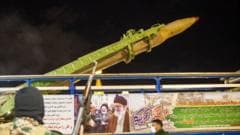
Having witnessed the limitations of relying on regional partners to deter aggression, Iranian military planners are increasingly focusing inward. Tehran has expanded reliance on its domestic arsenal of ballistic missiles, unmanned aerial vehicles, and potential leverage over regional trade routes to extract costs from adversaries. While proxy groups remain embedded in Tehran's strategic calculations, Iran now prioritizes self-reliant conventional capabilities and sovereign geographic leverage to defend its borders in a radically transformed regional security architecture.
Subscribe to the Global Briefing
Receive our flagship executive dispatch every morning. Essential geopolitical analysis, financial benchmarks, and breaking world events delivered to your inbox.
Related Stories & Follow-ups
Editorial Wire World
WorldZelenskyy Proposes Potential Meeting with Putin Amid Diplomatic Efforts
 World
WorldZelenskyy Claims Starlink Speed Restrictions Hamper Ukraine’s Ability to Intercept Russian Drones
 World
WorldZelenskyy Urges Action After Trump Pauses Sanctions on Russia Amid Escalating War
Reader Discussion
Leave a Comment
0 Comments
Owner
Editorial Oversight & Machine-Assisted Reporting
Human-in-the-Loop VerifiedEditorial Oversight & Machine-Assisted Reporting: This dispatch was synthesized and localized via OPA automated intelligence under continuous human editorial supervision.
Wire Source
This report was synthesized from BBC Persian under journalistic fair use.