
Violent High School Protests Across France Challenge Government Over Education Budget and Conditions
Key Takeaways
- Nationwide student blockades over educational underfunding have resulted in hundreds of injuries and thousands of arrests across France.
- Protesters cite acute teacher shortages, dilapidated school facilities, long days, and anxiety over the Parcoursup admissions platform.
- Despite higher-than-average OECD spending per pupil, the crisis reflects France's longstanding tradition of street protests driving policy concessions.
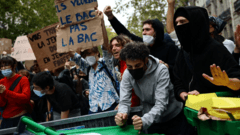
High school students across France have staged sweeping protests and blockades over chronic education budget shortages, understaffing, and deteriorating school facilities. The widespread mobilization has escalated into violent clashes with riot police outside secondary schools, leading to hundreds of injuries among demonstrators, teachers, and security officers, as well as thousands of arrests nationwide.
Demonstrators complain of prolonged teacher absences, overcrowded schedules running until 6 p.m., bans on mobile phones, and extreme heat in outdated school buildings. Students also cite immense pressure surrounding 'Parcoursup,' the national higher education admissions platform, in a system where roughly 80 percent of pupils pass the baccalauréat. Paris high schooler Madalena told the BBC that teachers are frequently absent for weeks without substitutes, while Interior Minister Laurent Nuñez described the scope and violence of the mobilization as unprecedented after around 500 people were arrested in a single day.
While OECD data indicates France actually spends more per secondary student than the European Union average and faces less severe teacher shortages than many peers, the unrest taps into deep-rooted domestic political traditions. Historic French youth movements repeatedly forced government concessions, including major emergency education funding packages won after massive school demonstrations in 1990 and 1998, as well as the complete repeal of controversial labor reforms in 2006.
Prime Minister Sébastien Lecornu emphasized that law enforcement officers are instructed to maintain public order rather than directly confront pupils, yet authorities face significant pressure as outside rioters infiltrate the demonstrations. With street action traditionally competing with institutional governance in France, officials face a critical test in balancing policing with urgent educational demands.
Subscribe to the Global Briefing
Receive our flagship executive dispatch every morning. Essential geopolitical analysis, financial benchmarks, and breaking world events delivered to your inbox.
Related Stories & Follow-ups
Editorial Wire World
WorldZelenskyy Claims Starlink Speed Restrictions Hamper Ukraine’s Ability to Intercept Russian Drones
 World
WorldZelenskyy Urges Action After Trump Pauses Sanctions on Russia Amid Escalating War
 World
WorldPalestinians Injured as Settler Attacks Intensify During Olive Harvest in West Bank
Reader Discussion
Leave a Comment
0 Comments
Owner
Editorial Oversight & Machine-Assisted Reporting
Human-in-the-Loop VerifiedEditorial Oversight & Machine-Assisted Reporting: This dispatch was synthesized and localized via OPA automated intelligence under continuous human editorial supervision.
Wire Source
This report was synthesized from BBC Persian under journalistic fair use.