
Former DRC President Joseph Kabila Joins Armed Coalition Against Government
![Joseph Kabila at a news conference [File: AFP]](/_next/image?url=https%3A%2F%2Fwww.aljazeera.com%2Fwp-content%2Fuploads%2F2026%2F10%2Fafp_6acdc261adbc-1791869537.jpg%3Fresize%3D1920%252C1440&w=3840&q=75)
Key Takeaways
- Former President Joseph Kabila has joined the newly formed Front for the Refoundation of the Nation (FRN) to oppose President Felix Tshisekedi.
- The FRN replaces the M23-AFC alliance and claims it will honor existing commitments made during Doha peace negotiations.
- The conflict in eastern DRC has displaced millions and involves complex regional tensions, particularly regarding relations with Rwanda.
Hopes for stability in the Democratic Republic of the Congo (DRC) have dimmed significantly following the announcement that former President Joseph Kabila has joined a new political-military coalition, the Front for the Refoundation of the Nation (FRN). This group replaces the Alliance Fleuve Congo (AFC) and the M23 movement, signaling a major escalation in the challenge against President Felix Tshisekedi. The coalition, which operates out of the rebel-held city of Goma, has explicitly accused the current administration of tyranny and declared its intent to resist the government by all necessary means, including armed force.
Local residents and political observers have expressed deep alarm at the development. Basa Juhudi, a Goma resident, noted that the involvement of a former head of state who understands the country’s inner workings makes the prospect of a peaceful resolution appear increasingly distant. Former National Assembly speaker Vital Kamerhe has publicly urged the FRN to abandon its path of violence, stating, "Nothing, absolutely nothing, can justify us taking up weapons against our own country." Despite these pleas, the coalition maintains that it is a necessary political alternative to the current regime.
Kabila’s transition from a former leader who oversaw the DRC’s first peaceful transfer of power in 2019 to a rebel leader marks a volatile shift in the nation’s political landscape. His presidency, which began in 2001 following his father’s assassination, was characterized by constitutional delays and significant civil unrest. By aligning himself with the FRN, Kabila is effectively challenging the legitimacy of his successor, Tshisekedi, while leveraging the existing military infrastructure of the M23 rebels who have occupied parts of North Kivu since early last year.
International diplomatic efforts, led by the United States and Qatar, now face a complex new reality. While the FRN has stated it will honor previous commitments made during Doha-based peace negotiations, the inclusion of a former president in the armed opposition complicates the mediation process. As the DRC grapples with this internal power struggle, the primary concern remains the humanitarian impact on a population already displaced by decades of regional rivalry and competition for mineral resources.
Subscribe to the Global Briefing
Receive our flagship executive dispatch every morning. Essential geopolitical analysis, financial benchmarks, and breaking world events delivered to your inbox.
Related Stories & Follow-ups
Editorial Wire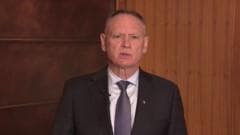


Reader Discussion
Leave a Comment
0 Comments
Owner
Editorial Oversight & Machine-Assisted Reporting
Human-in-the-Loop VerifiedEditorial Oversight & Machine-Assisted Reporting: This dispatch was synthesized and localized via OPA automated intelligence under continuous human editorial supervision.
Wire Source
This report was synthesized from Al Jazeera English under journalistic fair use.