
Iran Ranks Third Globally in Greenhouse Gas Emission Growth, UN Report Finds
Key Takeaways
- Iran's greenhouse gas emissions grew by 19 million tons in 2025.
- Iran is the eighth-largest emitter globally and the largest outside the G20.
- Methane intensity in Iran's oil and gas sector is 3-5 times higher than in Qatar or the UAE.
OPA WIRE, Oct 24 (OPA) — Iran’s greenhouse gas emissions rose by approximately 19 million tons in 2025, placing the nation third globally in growth behind the United States and Turkey. According to the UN’s 'Emissions Gap Report 2026,' this surge makes Iran the largest emitter outside the G20 group of nations. The data indicates that Iran’s growth rate significantly outpaces global trends, accounting for 10% of the total increase recorded by non-G20 countries between 2024 and 2025.
Anne Olhoff, the report’s chief scientific editor, stated that Iran’s total output now represents roughly 2% of global emissions, positioning the country as the world’s eighth-largest emitter. Data from the European Commission’s EDGAR research database estimates Iran’s total 2025 emissions at 1.119 billion tons of CO2 equivalent. Per capita emissions in the country reached 13 tons, nearly double the global average, while the economy remains 2.4 times more carbon-intensive than the world mean.
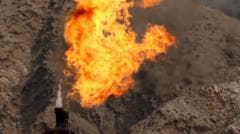
The report identifies the power and fuel production sectors as primary drivers, with each sector seeing a 3% increase in emissions during 2025. Agriculture, industry, construction, and transportation also contributed to the rise. Much of the emission profile is linked to the flaring of associated gas during oil extraction and methane leaks, with the World Bank identifying Iran as one of the world’s largest gas-flaring nations. Satellite data from the International Energy Agency shows methane intensity in Iran’s oil and gas production is three to five times higher than in nations like Qatar or the UAE.
Experts suggest that transitioning to renewable energy, such as solar and wind, remains a viable path to curbing these figures. While internal Iranian documents from 2018 proposed upgrading gas power plants to combined-cycle systems and improving industrial energy efficiency, implementation remains stalled. Significant capital investment and equipment modernization are required to address these systemic inefficiencies, though current economic constraints and limited financial resources continue to hinder progress toward climate commitments.
Subscribe to the Global Briefing
Receive our flagship executive dispatch every morning. Essential geopolitical analysis, financial benchmarks, and breaking world events delivered to your inbox.
Mohammad Karamali
Verified Wire ContributorSenior correspondent covering geopolitics, regional developments, and strategic international affairs for OPA News (Optimum Public Affairs).
Related Stories & Follow-ups
Editorial Wire


Reader Discussion
Leave a Comment
0 Comments
Owner
Editorial Oversight & Machine-Assisted Reporting
Human-in-the-Loop VerifiedEditorial Oversight & Machine-Assisted Reporting: This dispatch was synthesized and localized via OPA automated intelligence under continuous human editorial supervision.
Wire Source
This report was synthesized from BBC Persian under journalistic fair use.