
Iran Continues Relying on Foreign Components for Drone Production Despite Sanctions
Key Takeaways
- Iranian drones frequently use mass-produced, non-specialized commercial electronics.
- Procurement networks utilize intermediaries in China, Hong Kong, and the UAE to bypass sanctions.
- Iran remains dependent on foreign imports for navigation sensors, engine parts, and manufacturing machinery.
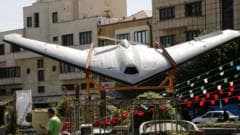
OPA WIRE, Oct 24 (OPA) — Iran’s military drone program, while demonstrating significant advancements in airframe design and assembly, continues to rely on foreign-sourced components for critical functionality. Investigations into wreckage recovered from the war in Ukraine reveal that Iranian-made Shahed-series drones frequently incorporate off-the-shelf electronic parts, including microprocessors and servo-motors, that are widely available in global commercial markets.
Experts note that the technology powering these systems is often neither advanced nor prohibitively expensive. Cathryn Clüver Ashbrook of the Center for Strategic and International Studies (CSIS) highlighted that many drones still utilize simple microprocessors, such as those produced by Texas Instruments, which have been on the market since 2008. These components are mass-produced for industrial equipment and consumer electronics, making them difficult to track through standard export control regimes.
To circumvent international sanctions, Iranian procurement networks operate through a web of intermediaries based in China, Hong Kong, and the United Arab Emirates. These entities facilitate the purchase of components, manage financial transactions, and obscure the identity of the end-user. U.S. Treasury Department records from 2025 and 2026 detail multiple enforcement actions against companies accused of acting as conduits for the Iranian aerospace industry, illustrating the persistent nature of these illicit supply chains.
While Iran has successfully mastered reverse engineering for some engine components and navigation sensors, the reliance on imported raw materials and specialized manufacturing equipment remains a structural vulnerability. As sanctions target specific intermediary firms, new networks frequently emerge to fill the void, ensuring a steady flow of dual-use technology. This ongoing cycle underscores the challenges of curbing the proliferation of Iranian unmanned aerial systems through trade restrictions alone.
Subscribe to the Global Briefing
Receive our flagship executive dispatch every morning. Essential geopolitical analysis, financial benchmarks, and breaking world events delivered to your inbox.
Mohammad Karamali
Verified Wire ContributorSenior correspondent covering geopolitics, regional developments, and strategic international affairs for OPA News (Optimum Public Affairs).
Related Stories & Follow-ups
Editorial Wire


Reader Discussion
Leave a Comment
0 Comments
Owner
Editorial Oversight & Machine-Assisted Reporting
Human-in-the-Loop VerifiedEditorial Oversight & Machine-Assisted Reporting: This dispatch was synthesized and localized via OPA automated intelligence under continuous human editorial supervision.
Wire Source
This report was synthesized from BBC Persian under journalistic fair use.