
Iran Official Vows Retaliation for Leader's Assassination Following Tehran Security Summit
Key Takeaways
- Ali Bagheri Kani confirmed Iran will seek retribution for the assassination of its martyred leader.
- Tehran hosted a quadrilateral security summit with Saudi Arabia, Pakistan, and Turkey.
- Iran claims to have successfully repelled two recent phases of military aggression through domestic self-reliance.
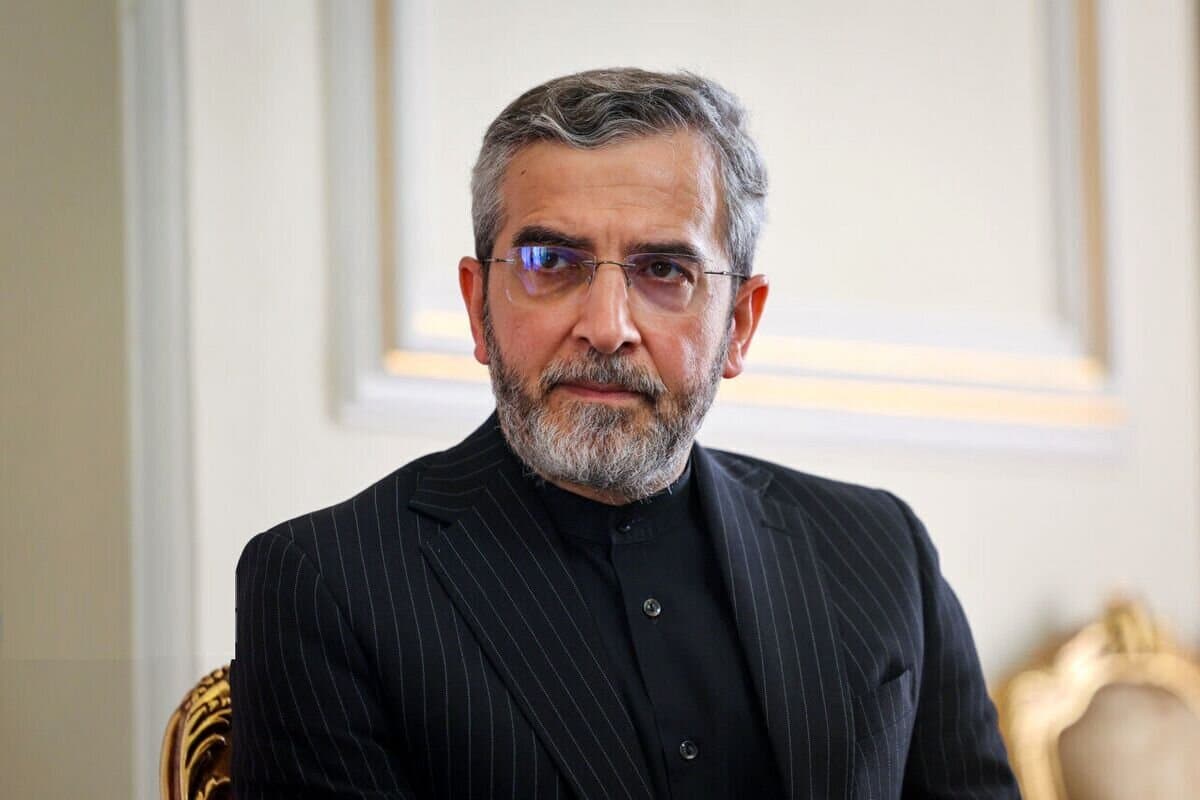
TEHRAN, Oct 26 (OPA) — Ali Bagheri Kani, deputy for foreign policy and international security at the Supreme National Security Council, addressed state media following the quadrilateral talks in Tehran. He asserted that Iran’s military and public resistance, combined with leadership directives, have successfully thwarted U.S. strategic objectives in the region. Bagheri Kani claimed that Israel is currently facing significant internal instability and has failed to execute its regional security agenda.
During the summit, representatives from Iran, Saudi Arabia, Pakistan, and Turkey focused on regional self-reliance and the consolidation of internal power structures. Bagheri Kani stated that the participating nations reached a consensus identifying Israel as the primary source of regional instability and crisis. He emphasized that the collective regional perspective acknowledges the effectiveness of Iran’s armed forces in neutralizing U.S. influence.
Bagheri Kani highlighted Iran’s recent military resilience, noting that the country successfully repelled two distinct phases of military aggression by relying solely on domestic capabilities. He framed this self-sufficiency as a model for regional security cooperation, suggesting that the participating nations are moving toward a unified stance against perceived external threats and Israeli military operations.
Looking ahead, the official reiterated that the state remains committed to pursuing justice for the assassination of its martyred leader. While he did not provide a specific timeline for potential retaliatory measures, his comments signal a hardening of Iran's diplomatic and security posture. The summit in Tehran underscores a broader effort by regional powers to recalibrate security alliances amidst ongoing tensions in the Middle East.
Subscribe to the Global Briefing
Receive our flagship executive dispatch every morning. Essential geopolitical analysis, financial benchmarks, and breaking world events delivered to your inbox.
Mohammad Karamali
Verified Wire ContributorSenior correspondent covering geopolitics, regional developments, and strategic international affairs for OPA News (Optimum Public Affairs).
Related Stories & Follow-ups
Editorial Wire


Reader Discussion
Leave a Comment
0 Comments
Owner
Editorial Oversight & Machine-Assisted Reporting
Human-in-the-Loop VerifiedEditorial Oversight & Machine-Assisted Reporting: This dispatch was synthesized and localized via OPA automated intelligence under continuous human editorial supervision.
Wire Source
This report was synthesized from Khabar Online under journalistic fair use.