
Arab-led parties projected to win record 18 seats in Israeli election

Key Takeaways
- Arab-led parties are projected to win 18 seats in the 120-member Knesset.
- Voter turnout among Palestinian citizens of Israel reached a historic 80 percent.
- The Likud and Yashar-led blocs are currently tied at 51 seats each.
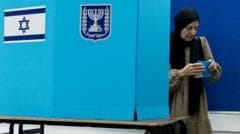
OPA WIRE, Oct 28 (OPA) — Exit polling data from Tuesday’s election shows the Joint List and Ra’am parties poised to capture a record number of seats in the Israeli parliament. The surge follows an unprecedented 80 percent voter turnout among Palestinian citizens of Israel, the highest participation rate recorded since 1999. Despite the gains, the opposition bloc led by Gadi Eisenkot’s Yashar party and Prime Minister Benjamin Netanyahu’s Likud party remain tied at 51 seats each, complicating efforts to form a stable governing coalition.
Ra’am leader Mansour Abbas signaled that his party is prepared to leverage its position to influence the formation of a new government. “With the numbers we have now, there is no government,” Abbas told Israel’s Channel 12. While both major blocs reportedly reached out to Arab-led parties, analysts suggest that ideological barriers and campaign promises to avoid coalitions with Arab factions may hinder the path to a 61-seat majority. Former Israeli ambassador Alon Pinkas noted that the political price for such cooperation remains a significant hurdle for Jewish-led parties.
Netanyahu’s Likud party employed aggressive rhetoric throughout the final hours of voting, attempting to mobilize its base by highlighting the high turnout in Arab communities. Witnesses reported vehicles flying Likud flags through Jerusalem while broadcasting the Islamic call to prayer to discourage voter apathy. Netanyahu further amplified these efforts on social media, warning supporters that a failure to vote would result in a government led by Abbas and fellow Knesset member Ahmad Tibi.
Palestinian citizens of Israel, who constitute approximately 21 percent of the country’s 10 million residents, have historically faced lower turnout rates than their Jewish counterparts. This election saw a shift in sentiment, with many voters participating despite long-standing grievances regarding systemic discrimination and the passage of restrictive legislation. As the Central Elections Committee confirms a national turnout of 77.7 percent, the focus shifts to the final vote count and the subsequent, likely protracted, negotiations to determine the next government.
Subscribe to the Global Briefing
Receive our flagship executive dispatch every morning. Essential geopolitical analysis, financial benchmarks, and breaking world events delivered to your inbox.
Mohammad Karamali
Verified Wire ContributorSenior correspondent covering geopolitics, regional developments, and strategic international affairs for OPA News (Optimum Public Affairs).
Related Stories & Follow-ups
Editorial Wire

Reader Discussion
Leave a Comment
0 Comments
Owner
Editorial Oversight & Machine-Assisted Reporting
Human-in-the-Loop VerifiedEditorial Oversight & Machine-Assisted Reporting: This dispatch was synthesized and localized via OPA automated intelligence under continuous human editorial supervision.
Wire Source
This report was synthesized from Al Jazeera English under journalistic fair use.