
Canada and EU Open Talks on Closer Strategic Association in Montreal
Key Takeaways
- Canada and the EU are negotiating a new 'associate' status to deepen strategic and economic ties.
- Germany and other EU members successfully lobbied to remove the specific 'associate member' title from draft summit documents.
- U.S. President Donald Trump has publicly criticized the potential partnership, threatening tariffs on Europe.
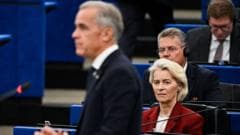
OPA WIRE, Oct 29 (OPA) — Prime Minister Mark Carney and European Commission President Ursula von der Leyen convened in Montreal on Thursday to initiate formal discussions on a new associate status between Canada and the European Union. The summit, which concludes Friday, seeks to strengthen cooperation on defense, critical minerals, and research, marking a significant shift in transatlantic policy as Canada navigates a strained trade relationship with the United States.
European Commission President Ursula von der Leyen stated the bloc’s ambition is to build the closest partnership ever established with a non-European nation. While the proposal for an "associate membership" was initially floated, the term has faced resistance from several EU member states, including Germany. German officials expressed concern that the title could create confusion regarding the bloc’s existing accession processes for nations like Ukraine and Moldova, leading negotiators to adopt the more flexible language of an "ever closer association" in draft documents.
Prime Minister Carney has actively pursued this pivot to Europe since taking office in 2025, citing the necessity of geopolitical alignment. The move follows recent Canadian agreements to access the EU’s Security and Defence Partnership program and a landmark energy deal signed in May to supply liquified natural gas to Germany. These developments occur against a backdrop of public criticism from U.S. President Donald Trump, who has dismissed the proposed partnership and threatened retaliatory tariffs against Europe should the arrangement be perceived as a hostile economic act.
Despite the diplomatic friction over terminology, both Canadian and EU officials confirmed that the focus remains on practical integration rather than full membership. Canadian representatives indicated that the country does not intend to pay standard EU membership fees, preferring instead to participate in targeted programs that provide mutual economic and security benefits. Formal discussions are expected to continue over the coming months as both parties work to define the operational framework of this expanded cooperation.
Subscribe to the Global Briefing
Receive our flagship executive dispatch every morning. Essential geopolitical analysis, financial benchmarks, and breaking world events delivered to your inbox.
Mohammad Karamali
Verified Wire ContributorSenior correspondent covering geopolitics, regional developments, and strategic international affairs for OPA News (Optimum Public Affairs).
Related Stories & Follow-ups
Editorial Wire

Reader Discussion
Leave a Comment
0 Comments
Owner
Editorial Oversight & Machine-Assisted Reporting
Human-in-the-Loop VerifiedEditorial Oversight & Machine-Assisted Reporting: This dispatch was synthesized and localized via OPA automated intelligence under continuous human editorial supervision.
Wire Source
This report was synthesized from BBC World under journalistic fair use.