
Future of Kurdish Women’s Protection Units Uncertain Under New Syrian Government
Key Takeaways
- The Syrian government has rejected the YPJ's request to join the national army as an independent female unit.
- The Syrian Democratic Forces, once a major U.S. ally, officially dissolved in August 2025.
- Approximately 1,500 YPJ fighters are currently awaiting a final decision on their integration into the Syrian Ministry of Interior.
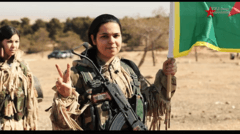
OPA WIRE, Oct 30 (OPA) — The Women’s Protection Units (YPJ), an all-female Kurdish military force, currently faces an existential crisis as the Syrian government moves to consolidate control over former autonomous regions. Once a primary U.S. ally in the campaign against the Islamic State, the YPJ is now navigating the integration of its approximately 1,500 fighters into the state’s new security apparatus. Damascus has formally rejected the group's request to join the national army as a cohesive, female-led unit, citing a lack of social acceptance for women in combat roles.
Negotiations between YPJ leadership and the Syrian Ministry of Interior are ongoing, though progress remains stalled. YPJ commander Newroz Ahmed confirmed in September that the Ministry of Defense denied their proposal to maintain an independent battalion structure. While the YPJ has pushed for a specialized counter-terrorism role in northeastern Syria, the government has instead suggested administrative or auxiliary police duties, such as airport security or tourism policing. This shift follows the August announcement by Mazloum Abdi, commander of the Syrian Democratic Forces, that the coalition had formally dissolved.
Formed in 2013 during the Syrian civil war, the YPJ became a global symbol of resistance during the defense of Kobani against ISIS. The force was a cornerstone of the gender-equal governance model established in northeastern Syria, where women held high-ranking positions in the autonomous administration. The current integration process follows the late 2024 ouster of former President Bashar al-Assad by Islamist-led rebel factions, which fundamentally altered the political landscape and the status of Kurdish-led institutions.
While the new government seeks to project a more inclusive image, the political representation of women remains limited, with only one female cabinet minister and women comprising roughly 10 percent of the new parliament. Despite the graduation of 150 women from a new police academy near Damascus in September—an event attended by YPJ representatives—the path forward for the YPJ as a distinct entity remains unresolved. The government continues to prioritize the centralization of military power, leaving the future of the Kurdish female fighters in a state of administrative limbo.
Subscribe to the Global Briefing
Receive our flagship executive dispatch every morning. Essential geopolitical analysis, financial benchmarks, and breaking world events delivered to your inbox.
Mohammad Karamali
Verified Wire ContributorSenior correspondent covering geopolitics, regional developments, and strategic international affairs for OPA News (Optimum Public Affairs).
Related Stories & Follow-ups
Editorial Wire
Reader Discussion
Leave a Comment
0 Comments
Owner
Editorial Oversight & Machine-Assisted Reporting
Human-in-the-Loop VerifiedEditorial Oversight & Machine-Assisted Reporting: This dispatch was synthesized and localized via OPA automated intelligence under continuous human editorial supervision.
Wire Source
This report was synthesized from BBC Persian under journalistic fair use.