
Trump Says US Not Hurrying Iran Deal Following Military Degradation
Key Takeaways
- President Trump claims the U.S. has neutralized the majority of Iran's military and nuclear infrastructure.
- A Qatari delegation is in Tehran to mediate, while the Strait of Hormuz remains a flashpoint for maritime incidents.
- French President Macron cited the war and the Hormuz blockade as the primary drivers of domestic economic protests in France.
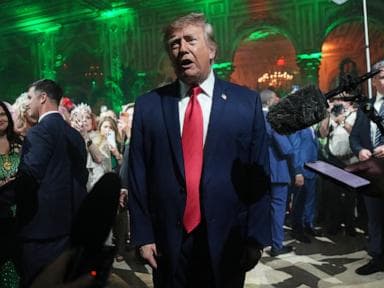
WASHINGTON, Nov 1 (OPA) — President Donald Trump said Saturday that the United States is not in a hurry to reach a diplomatic agreement with Iran, asserting that the U.S. military has already neutralized the bulk of Tehran's offensive power. Speaking at a Mar-a-Lago event, Trump claimed the U.S. has successfully dismantled Iran’s navy, air force, and anti-aircraft systems, alongside significant portions of its nuclear and manufacturing infrastructure. He noted that while one or two sites remain, they could be addressed quickly if necessary.
Despite the military campaign, diplomatic channels remain active. A Qatari delegation arrived in Tehran to pursue mediation efforts, even as reports of burning tankers in the Strait of Hormuz persist. At the United Nations, Qatar’s Permanent Representative, Sheikha Alya, demanded the unconditional reopening of the waterway, rejecting its use as a tool for political leverage. The Islamic Revolutionary Guard Corps Navy claimed three tankers exploded after hitting mines on Friday, though the U.S. military has previously dismissed such reports as false.
The conflict, which began in February following joint U.S.-Israeli strikes that killed top Iranian leadership including Supreme Leader Ayatollah Ali Khamenei, has shifted into a protracted war of attrition. While the intensity of direct combat has subsided, the U.S. continues to enforce a naval blockade of Iranian ports. Simultaneously, Saudi-backed Yemeni forces and Houthi rebels remain engaged in a separate, escalating conflict that has targeted Saudi oil and military infrastructure.
The economic fallout from the conflict is increasingly felt globally. French President Emmanuel Macron stated that the war and the subsequent blockade of the Strait of Hormuz are the primary drivers of rising energy costs and civil unrest in France. As the U.S. midterm elections approach, the administration has indicated that no further major strikes are planned before the vote, leaving the current stalemate in place for the immediate future.
Subscribe to the Global Briefing
Receive our flagship executive dispatch every morning. Essential geopolitical analysis, financial benchmarks, and breaking world events delivered to your inbox.
Mohammad Karamali
Verified Wire ContributorSenior correspondent covering geopolitics, regional developments, and strategic international affairs for OPA News (Optimum Public Affairs).
Related Stories & Follow-ups
Editorial Wire
Reader Discussion
Leave a Comment
0 Comments
Owner
Editorial Oversight & Machine-Assisted Reporting
Human-in-the-Loop VerifiedEditorial Oversight & Machine-Assisted Reporting: This dispatch was synthesized and localized via OPA automated intelligence under continuous human editorial supervision.
Wire Source
This report was synthesized from ABC News US under journalistic fair use.