
Global Households Increase Emergency Stockpiling Amid Rising Geopolitical and Climate Concerns
Key Takeaways
- Sweden issued government pamphlets to all households detailing emergency and wartime preparedness protocols.
- The U.S. Federal Emergency Management Agency (FEMA) provides standardized guidelines for family emergency planning and supply kits.
- Japanese disaster preparedness often includes specialized items like portable toilets and annual inventory rotation cycles.
OPA WIRE, Nov 2 (OPA) — Governments in nations ranging from Sweden to the United States have recently intensified efforts to encourage civilian preparedness for national emergencies. In the U.K., official advice on stockpiling essential items triggered a surge in retail demand for canned goods, radios, and flashlights. While such measures are new to some, they remain a standard practice in countries frequently impacted by natural disasters or regional instability.
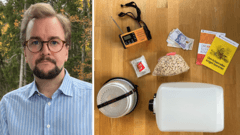
Individual approaches to preparedness vary significantly based on local risks and personal resources. In Stockholm, Andreas Wennerberg maintains a modest emergency cache including a hand-crank radio, 10 liters of water, and 2,230 Swedish krona in cash following a government-issued pamphlet. Conversely, in Maryland, Dan, a 38-year-old father, has invested approximately $6,000 in a comprehensive home system. His inventory includes 570 liters of water, solar panels, medical kits, and a rotating food supply designed to sustain his family for three months.
Japan’s long-standing culture of disaster readiness remains a benchmark for many, with citizens frequently updating emergency kits to account for seismic activity and extreme heat. Ayumi, a Tokyo resident, maintains a backpack containing portable toilets, hygiene products, and non-perishable items, which she updates annually. Similarly, in Atlanta, Nicole Bonds has adopted a gradual approach to building her supplies, focusing on batteries, power banks, and first-aid equipment to mitigate risks associated with increasingly severe weather patterns.
Experts note that while some individuals may lean toward disaster-focused anxiety, many participants view these preparations as a basic responsibility of home ownership. In the Netherlands, Michael Stuut has integrated technology into his emergency planning, including a portable Starlink satellite terminal to ensure connectivity. As climate volatility and international tensions persist, the practice of maintaining household emergency reserves is transitioning from a niche hobby to a mainstream component of modern domestic life.
Subscribe to the Global Briefing
Receive our flagship executive dispatch every morning. Essential geopolitical analysis, financial benchmarks, and breaking world events delivered to your inbox.
Mohammad Karamali
Verified Wire ContributorSenior correspondent covering geopolitics, regional developments, and strategic international affairs for OPA News (Optimum Public Affairs).
Related Stories & Follow-ups
Editorial Wire

Reader Discussion
Leave a Comment
0 Comments
Owner
Editorial Oversight & Machine-Assisted Reporting
Human-in-the-Loop VerifiedEditorial Oversight & Machine-Assisted Reporting: This dispatch was synthesized and localized via OPA automated intelligence under continuous human editorial supervision.
Wire Source
This report was synthesized from BBC Persian under journalistic fair use.