
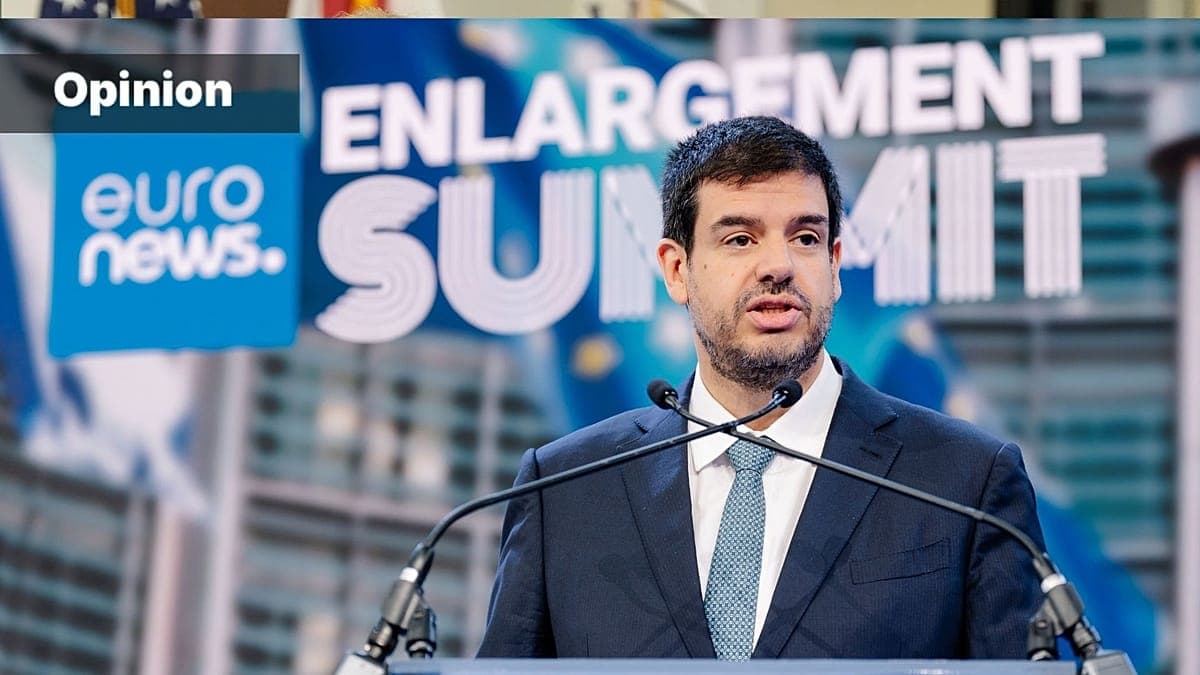
Euronews Summit Addresses EU Enlargement Amid Rising Public Skepticism
Key Takeaways
- 53 percent of European Union citizens support enlargement, ranging from 79 percent in Sweden to 35 percent in France.
- Candidate nation support is led by Albania at 92 percent and Georgia at 71 percent.
- Proposals at the Brussels summit included a Gibraltar-style model for rapid Schengen application in the Western Balkans.
OPA WIRE, Nov 4 (OPA) — The summit focused on the geopolitical imperative of expanding the European Union amid renewed conflict on the continent and shifting public sentiment in Western Europe. Discussions centered on the varying levels of support within candidate nations, where Albania leads with 92 percent public backing for EU accession. Georgia follows at 71 percent, while Ukraine, Montenegro, North Macedonia, and Bosnia and Herzegovina register above 60 percent. Moldova stands at 58 percent, with Türkiye and Serbia recording lower figures at 46 percent and 31 percent respectively.
Speakers highlighted the distinct demographic divides within candidate countries, noting that support among Serbians under the age of 30 reaches 63 percent. Croatian Prime Minister Andrej Plenković joined discussions addressing historical grievances in the Western Balkans and the need to align member state interests with broader integration goals. Officials debated whether current diplomatic strategies effectively counter opposing narratives and maintain engagement among populations in candidate states.
Proposals raised during the conference included institutional reforms within the European Council and European Parliament regarding voting rights and veto powers for incoming members. Participants also floated alternative integration frameworks, including a potential Gibraltar-style model for swift Schengen Area application for Western Balkan nations. Proponents argued that such measures would strengthen collective security and improve migration control while accelerating practical integration before full formal accession.
The debate underscored broader questions regarding public information campaigns and institutional communication within existing member states. With two-thirds of Europeans expressing a desire for more information regarding enlargement, organizers emphasized the responsibility of political leaders and media outlets in shaping public understanding. The summit concluded with calls for innovative policy approaches to address both domestic institutional concerns and the expectations of aspiring member states.
Subscribe to the Global Briefing
Receive our flagship executive dispatch every morning. Essential geopolitical analysis, financial benchmarks, and breaking world events delivered to your inbox.
Mohammad Karamali
Verified Wire ContributorSenior correspondent covering geopolitics, regional developments, and strategic international affairs for OPA News (Optimum Public Affairs).
Related Stories & Follow-ups
Editorial Wire

Reader Discussion
Leave a Comment
0 Comments
Owner
Editorial Oversight & Machine-Assisted Reporting
Human-in-the-Loop VerifiedEditorial Oversight & Machine-Assisted Reporting: This dispatch was synthesized and localized via OPA automated intelligence under continuous human editorial supervision.
Wire Source
This report was synthesized from Euro News under journalistic fair use.