
Power Shifts in Iran Amid US Elections and Factional Rivalries
Key Takeaways
- US congressional election results are set to influence Iran's foreign policy and internal power dynamics.
- Rivalries have intensified between neo-conservatives and hardline factions backed by key state institutions.
- Figures like Mohammad Bagher Ghalibaf and Mohsen Rezaei have adjusted their political postures in alignment with leadership directives.
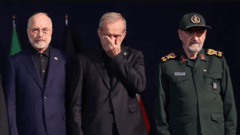
OPA WIRE, Nov 6 (OPA) — The shifting political landscape in Tehran highlights a growing divide between two distinct factions within the conservative establishment. On one side are the neo-conservatives, led by figures like Parliament Speaker Mohammad Bagher Ghalibaf, who have previously advocated for pragmatic approaches to negotiations with the United States. On the other side are hardline elements often labeled as 'Ali-e Usul-garayan,' whose influence is anchored in key state apparatuses including state television, Friday prayer pulpits, and the Basij paramilitary organization.
The rivalry intensified following disputes over diplomatic frameworks such as the Islamabad understanding. While figures like Ghalibaf initially signaled a willingness to explore direct engagement with Washington, political pressure from hardliners and directives from leadership have forced a more cautious approach. محسن رضایی (Mohsen Rezaei), secretary of the Expediency Discernment Council, has similarly aligned his public positions with the directives of the leadership, emphasizing strict adherence to established top-down policies rather than independent maneuvering.
Observers note that the domestic power struggle is intrinsically linked to external pressures, particularly the looming implications of American foreign policy under President Donald Trump. While state media and provincial Friday prayer leaders—who operate under the direct oversight of the Supreme Leader's office—have amplified uncompromising rhetoric, lower-tier officials have quickly adapted their stances to align with shifting political winds.
Uncertainty remains over whether the US legislative results will perpetuate the current state of neither war nor peace, or trigger a definitive shift in bilateral relations. As the political apparatus recalibrates, the friction between pragmatic politicians and entrenched hardliners underscores the fragile nature of Iran's internal policy debates moving forward.
Subscribe to the Global Briefing
Receive our flagship executive dispatch every morning. Essential geopolitical analysis, financial benchmarks, and breaking world events delivered to your inbox.
Mohammad Karamali
Verified Wire ContributorSenior correspondent covering geopolitics, regional developments, and strategic international affairs for OPA News (Optimum Public Affairs).
Related Stories & Follow-ups
Editorial Wire
Reader Discussion
Leave a Comment
0 Comments
Owner
Editorial Oversight & Machine-Assisted Reporting
Human-in-the-Loop VerifiedEditorial Oversight & Machine-Assisted Reporting: This dispatch was synthesized and localized via OPA automated intelligence under continuous human editorial supervision.
Wire Source
This report was synthesized from BBC Persian under journalistic fair use.