
New Zealand Election Ends in Deadlock as Coalition Talks Loom
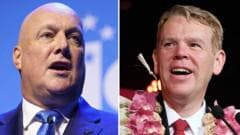
Key Takeaways
- Prime Minister Christopher Luxon's National Party won 42 seats but fell short of the 61-seat majority required to govern alone.
- Labour Party leader Chris Hipkins secured 36 seats and refused to concede, stating the parliament will require broad compromise.
- Official results and final seat allocations will be confirmed by the electoral commission on November 27 after special votes are counted.
OPA WIRE, Nov 7 (OPA) — Preliminary results show Prime Minister Christopher Luxon's National Party winning 42 seats, leaving the party 19 short of the simple majority needed to form a government independently. Combined with potential coalition partners ACT and New Zealand First, the centre-right bloc holds a slim lead over the opposition. However, the exact composition of the next parliament remains uncertain as vote counting continues across the country.
Opposition leader Chris Hipkins, whose Labour Party secured 36 seats, refused to concede defeat on election night. Hipkins emphasized that the tight results dictate a parliament built on compromise and cross-aisle cooperation. Meanwhile, minor parties made notable gains, with the Greens taking 16 seats, ACT securing 13, New Zealand First winning 12, the Opportunity Party claiming 7, and Te Pāti Māori taking 5.
The election campaign focused heavily on domestic economic pressures, including the rising cost of living and persistent unemployment. Analysts note that voter dissatisfaction over economic management eroded support for the two major parties, which captured a combined vote share of approximately 60 percent. The Opportunity Party crossed the 5 percent threshold for the first time, positioning itself as a potential kingmaker in the upcoming negotiations.
The Electoral Commission announced that official results will not be released until November 27, pending the processing of special votes cast outside standard electorates and overseas. Prime Minister Luxon stated he will lead a caretaker government until the final tally is confirmed and formal coalition talks begin. Professor Andrew Geddis of the University of Otago noted that final outcomes in individual electorates could shift the parliamentary balance once all special votes are processed.
Subscribe to the Global Briefing
Receive our flagship executive dispatch every morning. Essential geopolitical analysis, financial benchmarks, and breaking world events delivered to your inbox.
Mohammad Karamali
Verified Wire ContributorSenior correspondent covering geopolitics, regional developments, and strategic international affairs for OPA News (Optimum Public Affairs).
Related Stories & Follow-ups
Editorial Wire

Reader Discussion
Leave a Comment
0 Comments
Owner
Editorial Oversight & Machine-Assisted Reporting
Human-in-the-Loop VerifiedEditorial Oversight & Machine-Assisted Reporting: This dispatch was synthesized and localized via OPA automated intelligence under continuous human editorial supervision.
Wire Source
This report was synthesized from BBC World under journalistic fair use.