
Uzbekistan Nears Completion of Central Asia's First Wind-Battery Project
Key Takeaways
- The €232 million Nukus 2 project combines a 200-megawatt wind farm with a 100 megawatt-hour battery storage system in Karakalpakstan.
- Financing includes loans from the ADB, AIIB, Dutch development bank FMO, Standard Chartered, and Saudi EXIM.
- Developer ACWA targets full battery commissioning by the end of November 2026 to supply power for up to 300,000 people.
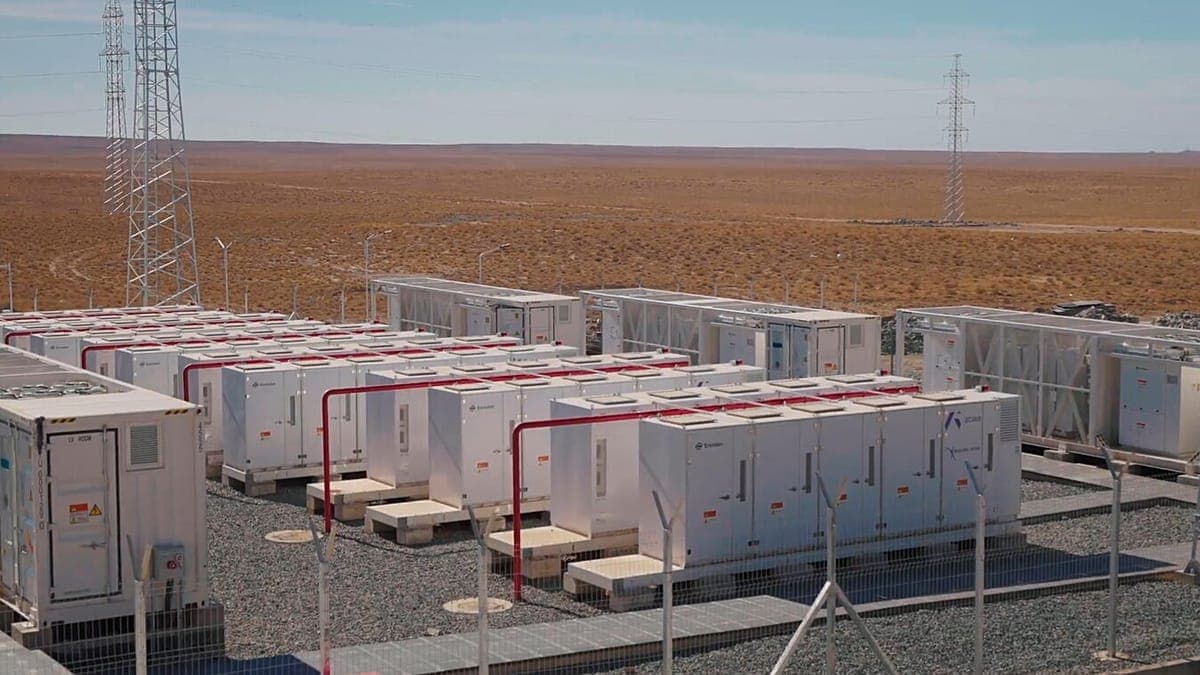
OPA WIRE, Nov 10 (OPA) — The Nukus 2 facility in the autonomous republic of Karakalpakstan features 26 wind turbines, with 25 already generating electricity and the battery system undergoing final commissioning. Developed by Saudi energy company ACWA Power through its local subsidiary ACWA Beruniy Wind, the project combines a 200-megawatt wind farm with a battery energy storage system capable of holding 100 megawatt-hours of electricity. Project director Sardorbek Mahmudov stated that construction reached 94.2% completion by late October, with the wind farm starting generation in August. The facility is designed to meet the electricity needs of more than 300,000 people once fully operational, generating nearly 728,000 megawatt-hours annually.
The integrated battery system provides short-term support during drops in wind generation or demand spikes, offering three to four hours of backup power depending on draw rates. Mahmudov noted that battery commissioning involves rigorous safety and fire-protection testing executed in stages. The project also incorporates a new 44-kilometer transmission line and infrastructure upgrades to link the facility directly to Uzbekistan's national grid under a 25-year power purchase agreement signed in March 2024 following a competitive tender.
Financing for the project involves a broad coalition of international development institutions and commercial banks. In September 2025, the Asian Development Bank (ADB) and its administered funds signed a loan package worth approximately €46 million, complemented by roughly €67 million approved separately by the Asian Infrastructure Investment Bank (AIIB). Additional lenders include Dutch development bank FMO, Standard Chartered, and Saudi EXIM. The ADB also provided a government-backed credit guarantee to reduce financial risks and foster bidding competition.
The initiative has delivered economic benefits to the local workforce in Karakalpakstan, employing between 750 and 800 workers during peak construction, including over 400 local specialists. Social manager Tarana Jafarova highlighted recruitment efforts aimed at supporting regional incomes alongside grievance and environmental mitigation protocols. ACWA aims to complete battery commissioning by the end of November 2026, bringing the entire complex into full commercial operation.
Subscribe to the Global Briefing
Receive our flagship executive dispatch every morning. Essential geopolitical analysis, financial benchmarks, and breaking world events delivered to your inbox.
Mohammad Karamali
Verified Wire ContributorSenior correspondent covering geopolitics, regional developments, and strategic international affairs for OPA News (Optimum Public Affairs).
Related Stories & Follow-ups
Editorial Wire

Reader Discussion
Leave a Comment
0 Comments
Owner
Editorial Oversight & Machine-Assisted Reporting
Human-in-the-Loop VerifiedEditorial Oversight & Machine-Assisted Reporting: This dispatch was synthesized and localized via OPA automated intelligence under continuous human editorial supervision.
Wire Source
This report was synthesized from Euro News under journalistic fair use.