
Robots Replace Divers as Navies Deploy Autonomous Mine Hunters in Strait of Hormuz
Key Takeaways
- Autonomous robotic systems are replacing traditional crewed vessels to detect naval mines in the Strait of Hormuz.
- Modern minehunting drones require crews of roughly 20 shore-based personnel, down from 80 on traditional ships.
- Collaborative defense projects by Thales, the Royal Navy, and the French Navy utilize AI-powered sonar to identify hidden seabed mines.
OPA WIRE, Nov 12 (OPA) — Navigating the Strait of Hormuz remains one of the most perilous maritime journeys globally, complicated by the persistent threat of modern naval mines resting on the seabed. Unlike traditional mine countermeasure vessels that typically require a crew of around 80 sailors, modern autonomous systems operate remotely with shore-based teams of just 20 personnel. This shift addresses mounting personnel retention challenges across NATO navies while keeping human crews out of direct harm's way during high-risk minehunting missions.
Defense contractors and military analysts emphasize that naval mines remain an inexpensive yet devastating asymmetric warfare tactic capable of breaking a commercial tanker's keel. Ian McFarlane of French defense group Thales notes that the low cost of deployment makes maritime explosives an enduring threat. Recent tensions in the Persian Gulf highlighted these risks when Iranian forces recovered an unmanned American underwater vehicle in the Strait of Hormuz, prompting the Pentagon to clarify that the device suffered a malfunction and carried no classified equipment.
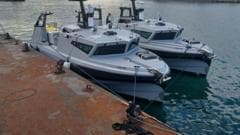
Autonomous minehunting technology has evolved significantly over the past two decades, originating with systems like the Remus 100 torpedo-shaped robot deployed during the 2003 Iraq War. Contemporary iterations, including advanced uncrewed surface vessels developed through collaborative efforts between Thales, the Royal Navy, and the French Navy, utilize sophisticated sonar sensors originally adapted from the oil and gas sector. These systems tow high-resolution imaging payloads that generate detailed three-dimensional models of the seabed, relying on artificial intelligence to flag potential threats that blend into the marine environment.
Deploying portable, containerized control centers allows military forces to airlift these robotic systems rapidly to operational theaters worldwide. Steve Prest, a research fellow at the Royal United Services Institute who pioneered uncrewed minehunting systems for the Royal Navy, asserts that while absolute zero risk is impossible to guarantee, autonomous networks substantially lower maritime threat levels. As navies continue expanding the scope of unmanned operations, these robotic platforms will increasingly dictate the future of mine countermeasures and maritime security.
Subscribe to the Global Briefing
Receive our flagship executive dispatch every morning. Essential geopolitical analysis, financial benchmarks, and breaking world events delivered to your inbox.
Mohammad Karamali
Verified Wire ContributorSenior correspondent covering geopolitics, regional developments, and strategic international affairs for OPA News (Optimum Public Affairs).
Related Stories & Follow-ups
Editorial Wire

Reader Discussion
Leave a Comment
0 Comments
Owner
Editorial Oversight & Machine-Assisted Reporting
Human-in-the-Loop VerifiedEditorial Oversight & Machine-Assisted Reporting: This dispatch was synthesized and localized via OPA automated intelligence under continuous human editorial supervision.
Wire Source
This report was synthesized from BBC Persian under journalistic fair use.