
European Health Systems Face Urgent Security Overhaul Amid Rising Conflict Risks
Key Takeaways
- Brigadier General Petter Iversen states that a resilient health sector is vital for national security during a wider conflict.
- HERA is developing broad-spectrum antivirals and monoclonal antibodies to counteract emerging biological and AI-driven threats.
- The ongoing war in Ukraine highlights critical shortages in trauma care, rehabilitation services, and mental health support for medical staff.
OPA WIRE, Nov 13 (OPA) — European governments are aggressively bolstering military defenses along NATO's eastern flank, but military and public health officials warn that the health sector remains critically vulnerable. Brigadier General Petter Iversen, Norway's Surgeon General and chair of NATO's Committee of the Chiefs of Military Medical Services, emphasized that national resilience depends directly on functional, well-prepared healthcare systems capable of withstanding simultaneous emergencies.
Simultaneously, health authorities are grappling with emerging biological threats driven by rapid advancements in artificial intelligence. Laurent Muschel, Director and Deputy Head of the Health Emergency Preparedness and Response Authority (HERA), noted that while AI accelerates medical innovation, malicious actors could exploit the technology to engineer dangerous biological agents. HERA is currently prioritizing broad-spectrum countermeasures, including antivirals and monoclonal antibodies, to defend against potential bioterrorism and chemical, biological, radiological, or nuclear attacks.
Preparedness levels across Europe remain unevenly distributed. Nations bordering Russia and along NATO's eastern flank have significantly heightened their situational awareness, expanding hospital capacity and infrastructure compared to countries further west. However, Iversen cautioned that physical infrastructure alone is insufficient without fundamental shifts in operational training, flexible staffing models, and robust supply chains.
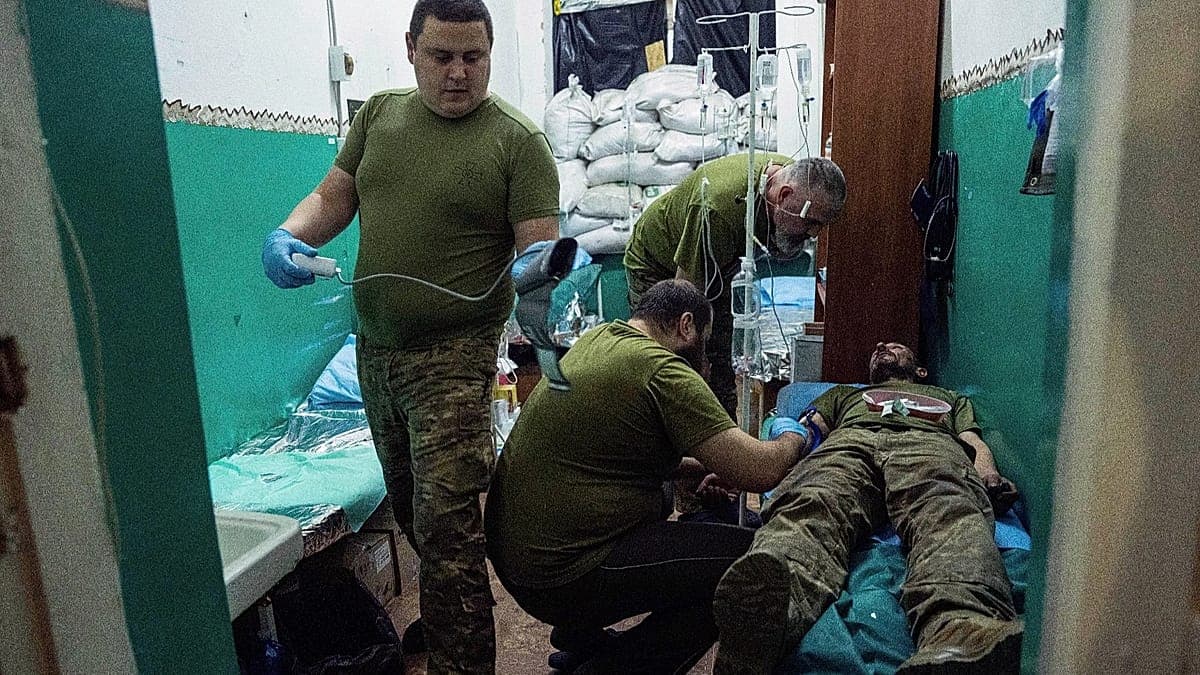
Lessons learned from the war in Ukraine have transformed theoretical planning into urgent operational reality, highlighting massive demands for trauma care, rehabilitation, and mental health support. Former WHO Country Office head in Ukraine Jarno Habicht stressed that maintaining a stable workforce of doctors, nurses, and support staff under sustained crisis conditions is essential for preserving national security and public health continuity.
Subscribe to the Global Briefing
Receive our flagship executive dispatch every morning. Essential geopolitical analysis, financial benchmarks, and breaking world events delivered to your inbox.
Mohammad Karamali
Verified Wire ContributorSenior correspondent covering geopolitics, regional developments, and strategic international affairs for OPA News (Optimum Public Affairs).
Related Stories & Follow-ups
Editorial Wire

Reader Discussion
Leave a Comment
0 Comments
Owner
Editorial Oversight & Machine-Assisted Reporting
Human-in-the-Loop VerifiedEditorial Oversight & Machine-Assisted Reporting: This dispatch was synthesized and localized via OPA automated intelligence under continuous human editorial supervision.
Wire Source
This report was synthesized from Euro News under journalistic fair use.