
Kenyan farmers adopt soil conservation techniques ahead of heavy seasonal rains
Key Takeaways
- Kenyan farmers are using sandbags and trenches to prevent topsoil erosion during heavy seasonal rains.
- Catastrophic rains in 2024 destroyed crops and killed more than 230 people nationwide.
- The Kenya Meteorological Department warns of above-average rainfall threatening the corn harvest.
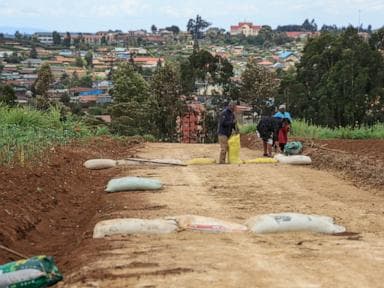
OPA WIRE, Nov 16 (OPA) — LIMURU, Kenya — Farmers across central Kenya are scrambling to fortify their land against anticipated heavy downpours during the short-rains season. Elizabeth Itotia, a smallholder farmer in Limuru, Kiambu County, spent 200,000 Kenyan shillings ($1,500) last year after catastrophic rains destroyed her crops and washed away the nutrient-rich topsoil on her 5-acre farm. To prevent similar losses, Itotia and her neighbors are now packing sacks with sand and soil to slow surface runoff, while planting Napier grass and bamboo to anchor vulnerable slopes.
Agricultural experts say these localized interventions are critical as erratic weather patterns threaten the country's staple crops. Samuel Munyiri, an agronomist at Osho Chemical Industries, noted that tilling the soil during active rainfall accelerates erosion. He advises producers to construct gabions, dig terracing, and prioritize rain-tolerant cereals like wheat and barley over sensitive legumes and vegetables. Coffee farmer Moses Muhoro in Karatina, Nyeri County, adopted similar runoff-control trenches after seeing his yields plummet following the 2024 floods.
The Kenya Meteorological Department has forecast above-average rainfall across key agricultural zones, including the coastal region, northeastern lowlands, and the Rift Valley, driven by Pacific Ocean temperature patterns. David Koros, assistant director of forecasting at the agency, stated that precipitation is expected to peak in November, threatening the crucial corn harvest. The overlap of heavy rains and the harvest season elevates the risk of early crop collection and subsequent aflatoxin contamination.
International and regional organizations emphasize that long-term resilience is vital for safeguarding national food security and preventing humanitarian emergencies. Tom Fletcher, United Nations undersecretary-general for humanitarian affairs and emergency relief coordinator, warned that early preparation remains essential. Meanwhile, agricultural advocates continue to push for expanded insurance coverage to protect smallholder farmers against mounting climate-related shocks.
Subscribe to the Global Briefing
Receive our flagship executive dispatch every morning. Essential geopolitical analysis, financial benchmarks, and breaking world events delivered to your inbox.
Mohammad Karamali
Verified Wire ContributorSenior correspondent covering geopolitics, regional developments, and strategic international affairs for OPA News (Optimum Public Affairs).
Related Stories & Follow-ups
Editorial Wire


Reader Discussion
Leave a Comment
0 Comments
Owner
Editorial Oversight & Machine-Assisted Reporting
Human-in-the-Loop VerifiedEditorial Oversight & Machine-Assisted Reporting: This dispatch was synthesized and localized via OPA automated intelligence under continuous human editorial supervision.
Wire Source
This report was synthesized from ABC under journalistic fair use.