
Iran's Protesters Serve House Arrest Under Electronic Surveillance
Key Takeaways
- Detainees from the January 2026 protests are serving sentences under electronic surveillance at home.
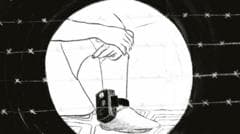
- The electronic anklets require charging every 12 hours, creating constant anxiety for wearers.
- Users report paying deposits and monthly fees for the monitoring equipment.
OPA WIRE, Nov 18 (OPA) — For many young Iranians arrested in the aftermath of the January 2026 protests, daily existence is dictated by the invisible boundaries of an electronic anklet. Shima, a 20-year-old detained during the Jan. 8-9 unrest, says her entire world has shrunk to a one-kilometer radius. Her sentence restricts her movement, turning routine errands into logistical challenges while transforming her domestic space into a de facto prison cell.
The psychological toll is compounded by constant logistical demands, including the need to recharge the ankle monitor every 12 hours for roughly 90 minutes. Another detainee, Gelاره, who spoke under a pseudonym, described the device as a physical and mental burden. "Sometimes I set alarms at midnight to wake up and charge it," she said. "The first few nights I couldn't sleep. It felt like someone was tightly gripping my ankle." Users must pay a deposit and monthly fees for the equipment, remaining financially and legally liable for any damage.
Iranian authorities have consistently rejected detaining individuals solely for peaceful protest participation, attributing arrests to alleged attacks on individuals and public property, alongside charges like spreading propaganda against the state. However, human rights organizations report widespread detentions of activists and demonstrators. While electronic monitoring is not exclusively applied to women, several female detainees have been fitted with the devices instead of serving traditional prison terms.
The strict monitoring system leaves little room for error or appeal. Detainees recount receiving sudden automated warnings for allegedly stepping outside designated zones—even when remaining indoors—with few immediate avenues to contest the alerts. For Shima and Gelare, concealing the device from friends and neighbors requires altering daily routines, shifting to online classes, and maintaining extreme vigilance over battery levels to avoid detection.
Subscribe to the Global Briefing
Receive our flagship executive dispatch every morning. Essential geopolitical analysis, financial benchmarks, and breaking world events delivered to your inbox.
Mohammad Karamali
Verified Wire ContributorSenior correspondent covering geopolitics, regional developments, and strategic international affairs for OPA News (Optimum Public Affairs).
Related Stories & Follow-ups
Editorial Wire

Reader Discussion
Leave a Comment
0 Comments
Owner
Editorial Oversight & Machine-Assisted Reporting
Human-in-the-Loop VerifiedEditorial Oversight & Machine-Assisted Reporting: This dispatch was synthesized and localized via OPA automated intelligence under continuous human editorial supervision.
Wire Source
This report was synthesized from BBC Persian under journalistic fair use.