
New York Times Report Linking Iran's Dams to Missile Sites Sparks Backlash
Key Takeaways
- The New York Times published an article on Nov. 16, 2026, examining potential links between Iran's dam network and underground missile sites.
- Researchers and scholars criticized the report, warning it could be used to justify military attacks on critical civilian infrastructure.
- The publication defended its reporting, stating it accurately reflected expert analysis while noting any military connection remains speculative.
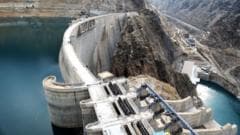
OPA WIRE, Nov 20 (OPA) — Published on Nov. 16, 2026, and written by Sanam Mahootchi and Erika Solomon, the New York Times article investigates whether some of Iran's water management projects and dams were constructed to support the country's military and missile programs. The piece maps airstrikes by the U.S. and Israel against military sites, comparing them with data on Iran's 533 dams compiled by Nima Shokri, a water security researcher at Hamburg University of Technology. The spatial distribution of strikes closely mirrored the dam network, prompting questions about dual-use infrastructure.
Several experts quoted in the report, including United Nations University water institute director Kaveh Madani, quickly distanced themselves from the article's framing. Madani and other researchers argued that the hypothesis lacks concrete evidence and carries dangerous implications for civilian water assets. The report also cited Farzin Nadimi of the Washington Institute, who estimated Iran operates at least 30 underground missile and drone facilities, and former Israeli military intelligence analyst Danny Citrinovitch, who noted Tehran's incentive to decouple military complexes from the public grid.
The controversy intensified as Iranian officials condemned the publication as a deliberate pretext to justify future military strikes against civilian infrastructure. The debate also revived historical comparisons to past disputed intelligence reports published by the New York Times, including a 1997 piece on Libya's water network and pre-war reporting on Iraq in 2003. The authors of the current article acknowledged that any direct connection between the multi-decade civilian water development program and the secretive missile initiative remains speculative.
In response to the backlash, the New York Times issued a formal statement defending the accuracy of its expert sourcing and denying accusations that the article aimed to incite violence or lay the groundwork for attacks. Meanwhile, the report revisits the 2018 arrest of Iranian conservationists by the Islamic Revolutionary Guard Corps intelligence organization, noting that some environmental activists now speculate they may have inadvertently encountered sensitive military installations prior to the death in custody of Kavous Seyed-Emami.
Subscribe to the Global Briefing
Receive our flagship executive dispatch every morning. Essential geopolitical analysis, financial benchmarks, and breaking world events delivered to your inbox.
Mohammad Karamali
Verified Wire ContributorSenior correspondent covering geopolitics, regional developments, and strategic international affairs for OPA News (Optimum Public Affairs).
Related Stories & Follow-ups
Editorial Wire


Reader Discussion
Leave a Comment
0 Comments
Owner
Editorial Oversight & Machine-Assisted Reporting
Human-in-the-Loop VerifiedEditorial Oversight & Machine-Assisted Reporting: This dispatch was synthesized and localized via OPA automated intelligence under continuous human editorial supervision.
Wire Source
This report was synthesized from BBC Persian under journalistic fair use.