
Trump Threatens Renewed Iran Strikes as Strait of Shipping Attacks Surge
Key Takeaways
- President Donald Trump threatened new military strikes against Iran after the new year if nuclear negotiations fail.
- Commercial shipping attacks in the Strait of Hormuz reached a record high in October, exceeding 30 reported incidents.
- The Pentagon's estimated cost for operations and ammunition replacement reached $48 billion by mid-November.
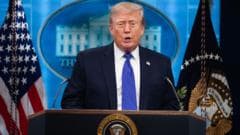
OPA WIRE, Nov 23 (OPA) — In a recent interview with Fox News, President Donald Trump stated his willingness to order new military strikes against Iran if a diplomatic agreement is not reached. Dismissing Iranian negotiators as stalling, Trump issued a direct warning to Iranian naval forces regarding the ongoing US maritime blockade, stating that any vessel attempting to break the blockade would face total destruction.
Simultaneously, data compiled by CNN and maritime trade operations shows that commercial vessel attacks in the Strait of Hormuz and surrounding waters exceeded 30 incidents in October—the highest monthly total since the conflict began in late February—with at least 22 additional attacks recorded by Sunday in November. Analysts attribute the escalation to mounting economic pressure on Tehran, with maritime tracking firm Kpler reporting that Iranian oil revenues could plummet to near-zero as secondary shipments dry up under the US blockade.
Public scrutiny surrounding the war's financial and human costs has intensified. A recent report from The Atlantic highlights that the Pentagon's estimated cost for operations and ammunition replenishment reached approximately $48 billion by mid-November, while the Trump administration has independently requested an additional $67 billion in supplemental war funding. Access to conflict-related information and operational costs has been heavily restricted under directives issued by US Defense Secretary Pete Hegseth, limiting congressional oversight and media transparency.
As tensions persist, analysts consulted by Fox News identify Iranian missile systems, naval capabilities, and command networks as the most probable targets for the initial phase of any renewed military operation. While Washington weighs the prospect of military escalation, independent maritime monitors note that the true frequency of attacks in the Gulf remains obscured by disabled vessel transponders and underreporting from commercial operators seeking to avoid detection in the contested waterway.
Subscribe to the Global Briefing
Receive our flagship executive dispatch every morning. Essential geopolitical analysis, financial benchmarks, and breaking world events delivered to your inbox.
Mohammad Karamali
Verified Wire ContributorSenior correspondent covering geopolitics, regional developments, and strategic international affairs for OPA News (Optimum Public Affairs).
Related Stories & Follow-ups
Editorial Wire


Reader Discussion
Leave a Comment
0 Comments
Owner
Editorial Oversight & Machine-Assisted Reporting
Human-in-the-Loop VerifiedEditorial Oversight & Machine-Assisted Reporting: This dispatch was synthesized and localized via OPA automated intelligence under continuous human editorial supervision.
Wire Source
This report was synthesized from BBC Persian under journalistic fair use.