
Spain Vows Never to Recognize Taliban Amid Dire Warnings on Women's Rights
Key Takeaways
- Spanish Foreign Minister José Manuel Albares confirmed Spain will never recognize the Taliban government.
- The UN reports the Taliban have issued 264 human rights-related decrees, with 164 targeting women and girls.
- The fourth annual 'Hear Our Voice' conference in Madrid gathered 70 activists, diplomats, and UN officials.
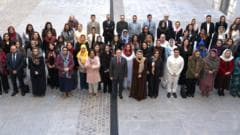
OPA WIRE, Nov 23 (OPA) — Spanish Foreign Minister José Manuel Albares delivered a definitive stance during the opening of the fourth annual 'Hear Our Voice' conference in Madrid, declaring that his country will refuse any diplomatic recognition of the Taliban. The event, hosted by the Spanish Foreign Ministry, brought together roughly 70 women's rights activists, civil society representatives, diplomats, and United Nations officials to address the humanitarian crisis facing women and girls in Afghanistan. Albares emphasized that half a population cannot be erased to build a future, noting that women remain stripped of education, employment, and political participation five years after the Taliban's return to power.
Fawzia Kofi, head of Women For Afghanistan and a former Afghan parliamentarian, echoed these condemnations at the conference. Kofi stated that Afghan women have been subjected to total disenfranchisement, remarking that the Taliban permit women to beg while barring them from working as doctors or teachers. Pramila Patten, the UN Special Representative on Sexual Violence in Conflict, provided alarming data during the sessions, noting that the Taliban have issued 264 decrees affecting human rights since reclaiming power, with 164 specifically targeting women and girls in what she described as systemic persecution.
The conference underscores ongoing international friction regarding the governance of Afghanistan. The Taliban administration has consistently maintained that its policies regarding women and girls adhere strictly to Islamic Sharia law, characterizing restrictions on education and employment as an internal domestic matter. Despite these assertions, international bodies and foreign ministries continue to increase diplomatic pressure, insisting that fundamental rights cannot be used as a bargaining chip for economic or political negotiations.
Looking ahead, officials and civil society delegates in Madrid pledged to maintain coordinated global pressure on the Taliban leadership to ensure accountability. While the Taliban have yet to issue a formal response to the Madrid summit, international human rights monitors and UN representatives warn that the systemic exclusion of women requires an unwavering, unified diplomatic stance. Madrid's firm refusal to pursue recognition sets a distinct benchmark for European foreign policy concerning Kabul.
Subscribe to the Global Briefing
Receive our flagship executive dispatch every morning. Essential geopolitical analysis, financial benchmarks, and breaking world events delivered to your inbox.
Mohammad Karamali
Verified Wire ContributorSenior correspondent covering geopolitics, regional developments, and strategic international affairs for OPA News (Optimum Public Affairs).
Related Stories & Follow-ups
Editorial Wire


Reader Discussion
Leave a Comment
0 Comments
Owner
Editorial Oversight & Machine-Assisted Reporting
Human-in-the-Loop VerifiedEditorial Oversight & Machine-Assisted Reporting: This dispatch was synthesized and localized via OPA automated intelligence under continuous human editorial supervision.
Wire Source
This report was synthesized from BBC Persian under journalistic fair use.