
Taiwan voters reject nuclear-free policy in referendum
Key Takeaways
- Taiwan voters approved a KMT-backed referendum to scrap the 'nuclear-free homeland' policy.
- The opposition argued nuclear power is necessary to meet the energy demands of the AI and semiconductor industries.
- The Executive Yuan stated nuclear energy can only return if safety, waste solutions, and social consensus are met.
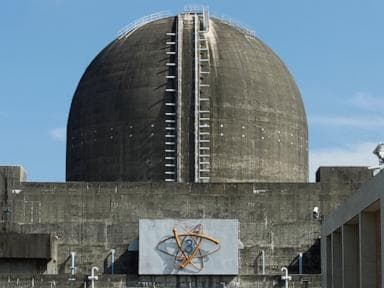
OPA WIRE, Nov 29 (OPA) — A majority of voters in Saturday's local elections backed the initiative led by the opposition Nationalist Party, or KMT, to abandon the nuclear phase-out policy. Taiwan ceased operations at its final active nuclear power plant in 2025, though the facility is currently undergoing refurbishment and could potentially restart within two years. While nuclear power was never legally banned on the island, it was tightly restricted by executive policy. Saturday's referendum outcome provides the political mandate needed to pressure the administration of President Lai Ching-te on energy security.
KMT head Cheng Li-wun urged authorities to restart nuclear energy as quickly as possible following the election results. The opposition party campaigned heavily on the referendum, arguing that atomic power is essential for stabilizing the electricity grid to support the island's booming artificial intelligence and semiconductor industries. The KMT successfully pushed the ballot measure alongside its coalition partner, the Taiwan People's Party.
Taiwan's cabinet, the Executive Yuan, stated that it would respect the outcome of the vote while outlining strict prerequisites for any future atomic energy use. Executive Yuan spokesperson Michelle Lee emphasized that nuclear safety must be assured, long-term solutions for nuclear waste must be established, and broad social consensus must be achieved. President Lai had previously signaled flexibility on energy choices, differing from his predecessor Tsai Ing-wen and historical party lines.
Political analysts noted that the referendum appeared largely driven by mobilized KMT base voters rather than extensive public debate during the campaign. Wei-hao Huang, a political science professor at National Sun Yat-sen University, observed minimal public discourse surrounding the energy policy prior to the ballot. The vote leaves the administration facing complex logistical and regulatory hurdles before any concrete moves are made to revive the island's nuclear sector.
Subscribe to the Global Briefing
Receive our flagship executive dispatch every morning. Essential geopolitical analysis, financial benchmarks, and breaking world events delivered to your inbox.
Mohammad Karamali
Verified Wire ContributorSenior correspondent covering geopolitics, regional developments, and strategic international affairs for OPA News (Optimum Public Affairs).
Related Stories & Follow-ups
Editorial Wire


Reader Discussion
Leave a Comment
0 Comments
Owner
Editorial Oversight & Machine-Assisted Reporting
Human-in-the-Loop VerifiedEditorial Oversight & Machine-Assisted Reporting: This dispatch was synthesized and localized via OPA automated intelligence under continuous human editorial supervision.
Wire Source
This report was synthesized from ABC under journalistic fair use.