
Iraq's Security Challenges Following Full US Troop Withdrawal
نکات کلیدی
- The US will complete the withdrawal of its 2,500 remaining troops from Iraq by September 30, 2026.
- Prime Minister Ali Zeidi has extended the deadline for the disarmament of militias to June 30, 2027.
- Experts warn that hardline militias like Kataib Hezbollah remain outside state control, threatening post-withdrawal stability.
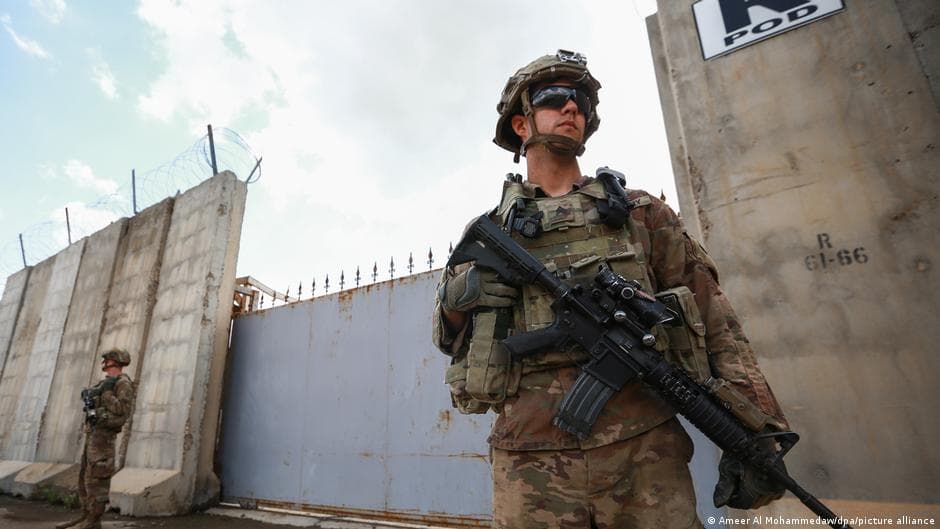
سرویس بینالملل اوپا، ۹ مهر (اوپا) — For the Iraqi government in Baghdad, September 30, 2026, marks the end of an era. Prime Minister Ali Zeidi stated that October 1 will represent a new chapter, asserting that the nation will be free from foreign military presence and that national sovereignty will be fully realized across its territory. This historic transition is set to be celebrated as 'Independence Day,' with a four-day national holiday declared to commemorate the shift in the country's geopolitical status.
Under the 2024 agreement, the United States will complete the withdrawal of its remaining 2,500 troops by September 30. This exit concludes the 12-year 'Operation Inherent Resolve,' which was launched to combat the Islamic State (ISIS) during its rapid expansion across Iraq and Syria. US Defense Secretary Pete Hegseth noted that the transition aims to foster a bilateral relationship based on trade and defense, provided that Iraq remains a stable, sovereign, and secure environment free from terrorist intimidation.
This withdrawal signifies the end of over two decades of US military involvement in Iraq, which began with the 2003 invasion, followed by a 2011 withdrawal and a 2014 return to fight ISIS. The move aligns with a broader American strategy to reduce its military footprint in the Middle East. However, the vacuum left by the US is complex, as Turkey maintains a military presence, and domestic militias continue to operate outside the control of the central government in Baghdad.
Baghdad had initially conditioned the US exit on the disarmament of various armed groups and their integration into the state security apparatus. Prime Minister Zeidi has extended the disarmament deadline to June 30, 2027, including a 90-day grace period for groups to cease hostilities. Despite this, experts like Alina L. Romanowski of the Atlantic Council warn that hardline groups such as Kataib Hezbollah and Harakat al-Nujaba show no intention of surrendering their weapons, posing a significant threat to internal stability.
Looking ahead, analysts like Renad Mansour of Chatham House suggest that while the security-focused relationship is ending, the US-Iraq partnership will pivot toward economic cooperation. However, concerns remain for vulnerable minorities, including Christians, Yazidis, and Kurds in the north. As foreign protection wanes, the risk of regional power encroachment and internal militia violence remains high, leaving the Iraqi government facing a precarious future in maintaining order without the presence of international military support.
عضویت در خبرنامه تحلیلی روزانه
مهمترین رویدادهای بینالمللی، تحلیلهای اختصاصی اقتصاد سیاسی و اخبار فوری را هر روز صبح در ایمیل خود دریافت کنید.
Mohammad Karamali
خبرنگار تأییدشده خبرگزاریعضو رسمی سرویس بینالملل و پوشش رویدادهای راهبردی خبرگزاری بینالمللی اوپا (Optimum Public Affairs).
مطالب مرتبط و پیگیریها
سرویس تحریریه
Reader Discussion
Leave a Comment
0 Comments
Owner
Editorial Oversight & Machine-Assisted Reporting
Human-in-the-Loop VerifiedEditorial Oversight & Machine-Assisted Reporting: This dispatch was synthesized and localized via OPA automated intelligence under continuous human editorial supervision.
منبع خبری
This report was synthesized from DW Persian under journalistic fair use.