
US Defense Secretary Announces Plans for Televised Execution of Fort Hood Shooter
Key Takeaways
- Defense Secretary Pete Hegseth announced plans to execute Fort Hood shooter Nidal Hasan via a live-streamed firing squad.
- The last major public execution in the U.S. took place in 1936 in Kentucky, drawing 20,000 spectators.
- Public support for the death penalty in the U.S. has fallen from 80% in 1994 to 52% currently.
The United States is facing a potential return to public executions, a practice largely abandoned nearly a century ago. Defense Secretary Pete Hegseth recently announced that the military intends to execute Nidal Hasan, the perpetrator of the 2009 Fort Hood shooting that claimed 13 lives, via a firing squad. In a move that has sparked intense national debate, the Pentagon stated that the execution would be broadcast live over the internet, marking a significant departure from modern judicial norms.
Critics and legal experts have expressed profound shock at the decision. Michael Radelet, a sociology professor and death penalty researcher, warned that such a spectacle risks turning capital punishment into a form of public entertainment. "Bring your popcorn and invite your friends," Radelet remarked, highlighting the ethical concerns of digitizing state-sanctioned violence. Public support for the death penalty in the U.S. has steadily declined, dropping from 80% in 1994 to 52% today, according to recent polling data.
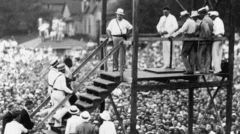
Historical context looms large over this announcement. The last widely publicized public execution in the U.S. occurred in 1936 in Owensboro, Kentucky, where an estimated 20,000 people gathered to witness the hanging of Rainey Bethea. The macabre atmosphere of that event, which included vendors selling snacks, caused widespread public shame and led to the eventual prohibition of public executions in most states. For many, the 1936 event remains a dark chapter that the nation had long considered settled.
As the administration moves forward, sociologists suggest that political polarization may be desensitizing the public to such measures. While some argue the move serves as a deterrent, others fear it aligns the U.S. with nations known for public state violence, such as North Korea or Iran. Whether the broadcast will proceed remains a subject of intense legal and ethical scrutiny, as the nation grapples with the implications of reintroducing public spectacle into its criminal justice system.
Related Stories & Follow-ups
Editorial Wire Politics
Zelenskyy Urges Sanctions Enforcement After Trump Pauses Measures Against Russia
 Politics
Reports Allege Elon Musk and Donald Trump Coordinated Starlink Restrictions in Ukraine
 Politics
Trump Waives Sanctions on Russian Oil Buyers to Ease Domestic Energy Prices
Reader Discussion
Leave a Comment
0 Comments
Owner
Editorial Oversight & Machine-Assisted Reporting
Human-in-the-Loop VerifiedEditorial Oversight & Machine-Assisted Reporting: This dispatch was synthesized and localized via OPA automated intelligence under continuous human editorial supervision.
Wire Source
This report was synthesized from BBC Persian under journalistic fair use.