
US Secret Service Deputy Director Matt Quinn Resigns Amid Security Failures
Key Takeaways
- Deputy Director Matt Quinn resigned following a series of high-profile security failures and increased threats.
- The Secret Service has seen a 40 percent rise in threat cases this year, totaling approximately 10,000 incidents.
- The agency continues to face scrutiny over its inability to fully mitigate drone threats and past operational lapses.
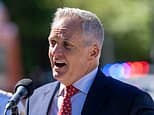
United States Secret Service Deputy Director Matt Quinn announced his resignation on Friday, marking a significant leadership change within the agency as it grapples with an unprecedented surge in threats against high-profile protectees. Quinn, who returned to the agency last May after a previous 23-year career, stated that he and Director Sean Curran had been coordinating a transition plan for several months. His departure follows a period of intense public and congressional scrutiny regarding the agency's operational efficacy and its ability to secure the President and other officials.
The resignation comes on the heels of a candid '60 Minutes' interview where Quinn and Director Curran acknowledged the immense pressure facing the service. Curran revealed that the agency has processed approximately 10,000 threat cases since January, representing a 40 percent increase compared to the previous year. During the broadcast, Quinn openly admitted that the agency has yet to fully resolve the 'huge problem' posed by drone swarms, despite the implementation of advanced AI and radar-based counter-drone technologies at the White House.
This leadership shuffle occurs against a backdrop of historic security lapses that have severely damaged the agency's reputation. Most notably, the July 2024 assassination attempt on Donald Trump in Butler, Pennsylvania, was labeled by former Director Kimberly Cheatle as the agency's most significant failure in decades. A subsequent Department of Homeland Security Inspector General report confirmed that the Secret Service missed multiple opportunities to neutralize the gunman, further fueling demands for systemic reform within the organization.
Looking ahead, the agency faces a volatile threat landscape that includes foiled drone plots and violent incidents, such as the shooting at the White House Correspondents' Dinner earlier this year. As the Secret Service attempts to modernize its defensive capabilities, the departure of a key deputy director underscores the ongoing struggle to adapt to rapidly evolving security challenges. The agency remains under pressure to demonstrate that it can effectively protect the nation's leadership amidst a climate of heightened political polarization and technological threats.
Related Stories & Follow-ups
Editorial Wire Politics
Zelenskyy Urges Sanctions Enforcement After Trump Pauses Measures Against Russia
 Politics
Reports Allege Elon Musk and Donald Trump Coordinated Starlink Restrictions in Ukraine
 Politics
Trump Waives Sanctions on Russian Oil Buyers to Ease Domestic Energy Prices
Reader Discussion
Leave a Comment
0 Comments
Owner
Editorial Oversight & Machine-Assisted Reporting
Human-in-the-Loop VerifiedEditorial Oversight & Machine-Assisted Reporting: This dispatch was synthesized and localized via OPA automated intelligence under continuous human editorial supervision.
Wire Source
This report was synthesized from Daily Mail under journalistic fair use.