
Tiny image sparks big backlash in Nikon photo contest
Key Takeaways
- Nikon is re-evaluating its Small World In Motion contest winner following allegations of AI manipulation.
- Dr. Ning Xu admits to using AI for image visualization but denies using it to generate the biological motion.
- Experts identified structural anomalies in the video, including cilia that appear to manifest from nowhere.
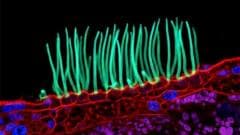
OPA WIRE, Oct 1 (OPA) — The prestigious Nikon Small World In Motion competition is currently embroiled in a significant controversy following allegations that the winning entry, a scientific video, was manipulated using generative artificial intelligence. The contest, which has celebrated the intersection of microscopy and art for 15 years, is now re-evaluating its top prize after experts raised serious concerns regarding the authenticity of the footage. The video, submitted by Dr. Ning Xu of Tsinghua University, purports to show cilia—hair-like structures—moving within the airways of a child suffering from a rare disease. This development has cast a shadow over one of the most respected platforms for scientific imaging.
Dr. Xu has defended his submission, asserting that while he utilized AI to distinguish and visualize features within reconstructed grayscale images, he did not violate the contest's strict regulations. He explicitly stated that AI was not employed to generate the experimental movie, the cilia, or their motion. Despite this, Nikon has confirmed that it is conducting a thorough investigation and that Dr. Xu is cooperating by providing additional technical documentation. The prize, which includes a $3,000 award, is currently under scrutiny as the scientific community demands transparency regarding the use of digital enhancement tools in research-based competitions.
Historically, the Small World In Motion contest has served as a vital bridge between the rigorous world of laboratory science and the public's appreciation for microscopic beauty. For over a decade, it has encouraged researchers to share the hidden wonders of the natural world, often using manual staining and dyeing techniques to enhance visibility. However, the rapid advancement of generative AI has introduced new complexities. Critics argue that the winning video contains structural anomalies, such as cilia that appear to manifest from nowhere or disappear, which do not align with known biological behaviors or standard cellular imaging protocols.
The backlash has been swift and widespread, with prominent academics and former judges questioning the integrity of the winning entry. Edward Phelps, an associate professor at the University of Florida, noted that the structures in the video exhibit unnatural movements, while PhD student Ian Donovan pointed to a potential AI-generated watermark within the source material. This has sparked a broader debate about the ethics of AI in scientific reporting. If the video is found to be in violation of the rules, it could lead to disqualification, potentially undermining the credibility of the competition and the efforts of other honest entrants.
Looking ahead, the incident serves as a critical wake-up call for scientific organizations regarding the necessity of stringent verification processes in the age of AI. Experts suggest that competitions must now implement more robust forensic analysis to distinguish between legitimate scientific enhancement and synthetic generation. As Nikon prepares to release an update on its findings, the scientific community remains on edge, awaiting a resolution that will likely set a precedent for how future microscopy contests handle digital integrity and the evolving role of artificial intelligence in scientific documentation.
Subscribe to the Global Briefing
Receive our flagship executive dispatch every morning. Essential geopolitical analysis, financial benchmarks, and breaking world events delivered to your inbox.
Mohammad Karamali
Verified Wire ContributorSenior correspondent covering geopolitics, regional developments, and strategic international affairs for OPA News (Optimum Public Affairs).
Related Stories & Follow-ups
Editorial Wire


Reader Discussion
Leave a Comment
0 Comments
Owner
Editorial Oversight & Machine-Assisted Reporting
Human-in-the-Loop VerifiedEditorial Oversight & Machine-Assisted Reporting: This dispatch was synthesized and localized via OPA automated intelligence under continuous human editorial supervision.
Wire Source
This report was synthesized from BBC World under journalistic fair use.