
SpaceX Successfully Catches Starship with Mechanical Arms in Texas
Key Takeaways
- SpaceX successfully caught its returning Starship spacecraft using mechanical launch-tower arms in Texas.
- The orbital vehicle deployed 26 Starlink satellites and completed 14 laps around Earth before landing.
- The first-stage booster experienced an engine anomaly and self-destructed over the Gulf of Mexico during descent.
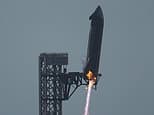
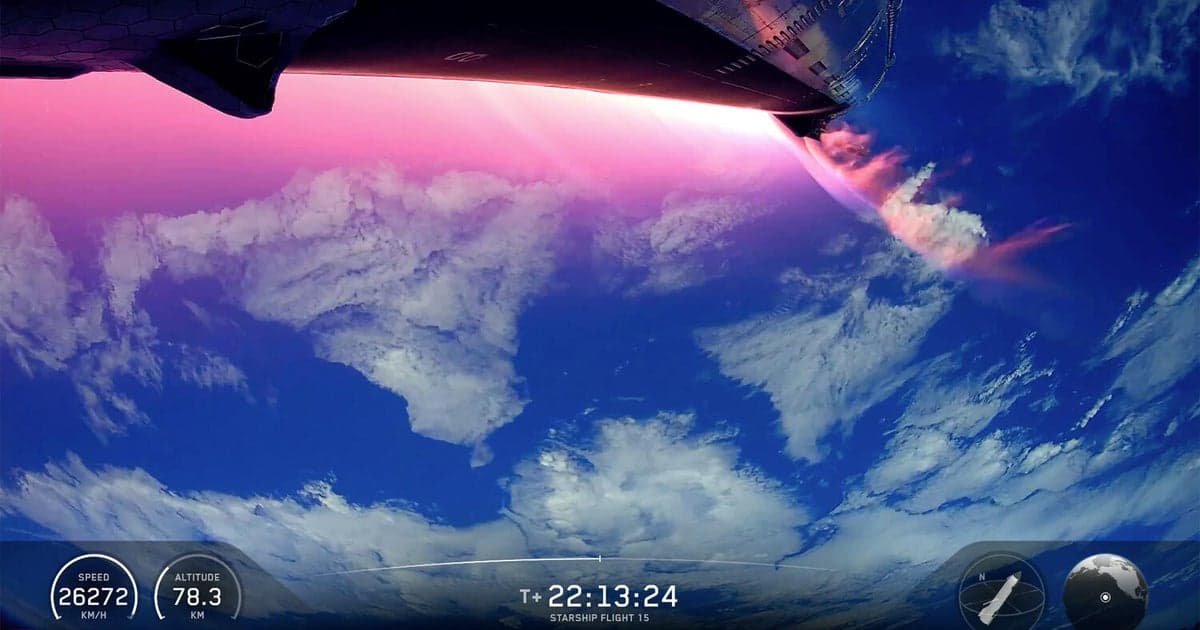
OPA WIRE, Nov 15 (OPA) — The 407-foot stainless steel spacecraft descended slowly over the launch pad at SpaceX's base near the U.S.-Mexican border, where structural 'chopstick' arms successfully intercepted the vehicle. The flight originated late Friday afternoon, marking the 15th full-scale test of a Starship since 2023 and only its second trip to orbit. After separating cleanly from its booster, the upper-stage vehicle deployed 26 advanced Starlink satellites while orbiting 165 miles above Earth.
NASA Administrator Jared Isaacman praised the achievement on social media, describing the operation as 'almost magic.' SpaceX spokesman Dan Huot characterized the capture as the 'Holy Grail of space flight,' emphasizing that plummeting through thermal friction to be snatched by steel fundamentally alters the economics of space operations. NASA maintains a multibillion-dollar contract with SpaceX to adapt the Starship for an upcoming lunar landing.
While the orbital ship completed 14 laps around the globe and tested its heat shield successfully, the flight encountered complications during the booster's return sequence. SpaceX engineer Kate Tice noted that the booster's engines shut down prematurely, prompting the guidance system to initiate an automatic self-destruction over the Gulf of Mexico. Engineers are actively investigating the anomaly, though SpaceX has previously executed three successful booster catches using similar tower mechanisms.
The vertical recovery technique builds on SpaceX's long-term push to lower launch costs through rapid vehicle recycling, mirroring the company's pioneering Falcon 9 landings that began in 2015. Capturing the orbital Starship proved significantly more complex than catching boosters due to the extreme velocities and altitudes involved. The company aims to leverage the demonstrated capability to scale up flight frequencies and cargo capacity for deep-space missions.
Subscribe to the Global Briefing
Receive our flagship executive dispatch every morning. Essential geopolitical analysis, financial benchmarks, and breaking world events delivered to your inbox.
Mohammad Karamali
Verified Wire ContributorSenior correspondent covering geopolitics, regional developments, and strategic international affairs for OPA News (Optimum Public Affairs).
Related Stories & Follow-ups
Editorial Wire Science
Nobel Prize in Chemistry Awarded to Henri B. Kagan and Kenso Soai
 Science
Nobel Physics Prize Awarded to Francis Halzen for Astrophysical Neutrino Breakthrough
 Science
SpaceX Catches Starship Rocket with Mechanical Arms After Orbital Flight
Reader Discussion
Leave a Comment
0 Comments
Owner
Editorial Oversight & Machine-Assisted Reporting
Human-in-the-Loop VerifiedEditorial Oversight & Machine-Assisted Reporting: This dispatch was synthesized and localized via OPA automated intelligence under continuous human editorial supervision.
Wire Source
This report was synthesized from Daily Mail under journalistic fair use.