
SpaceX Catches Starship Rocket with Mechanical Arms After Orbital Flight
Key Takeaways
- SpaceX successfully caught the Starship upper stage using mechanical arms at its Texas launch site.
- The 407-foot-tall rocket generated 16 million pounds of thrust from 33 first-stage Raptor engines.
- NASA plans to use a Starship variant to carry astronauts to the lunar surface in 2028.
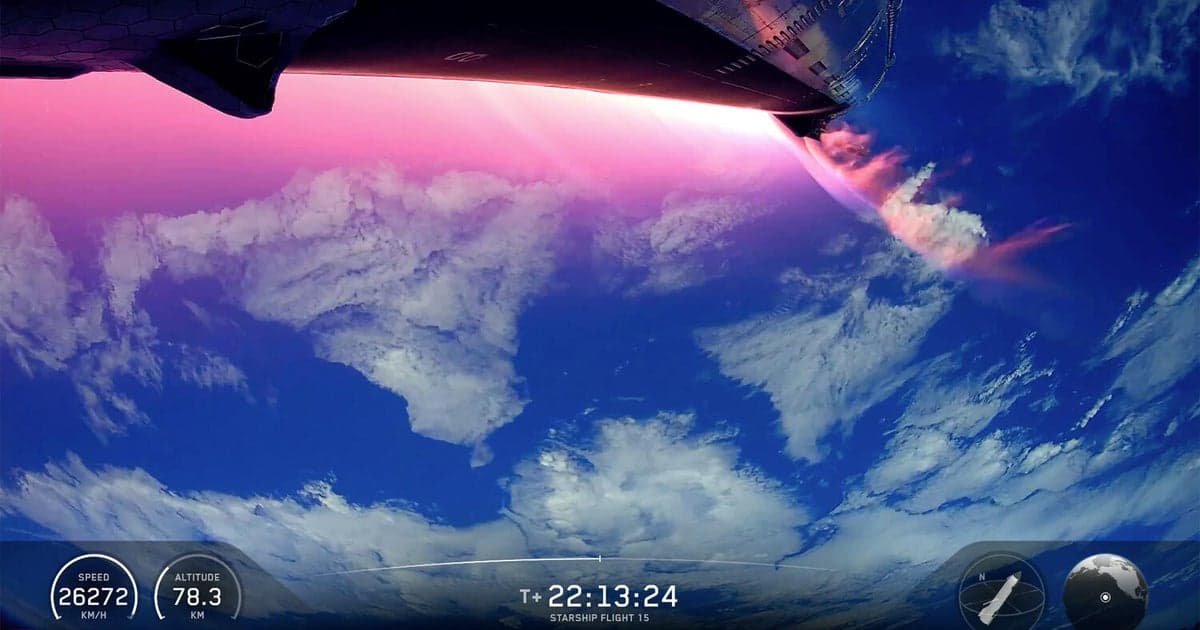
WASHINGTON, Nov 14 (OPA) — Following a 22-hour stay in space, the Starship rocket plunged back to Earth on Saturday, enduring the blazing heat of reentry while homing in on its Texas Gulf Coast launch site. The vehicle flipped vertical at the last moment and settled into the grasp of two huge mechanical arms on its launch gantry. Throngs of SpaceX employees gathered nearby cheered and applauded as the rocket restarted three of its six methane-fueled Raptor engines to flip upright, rapidly slowing to a near hover as the robot arms moved in for a mechanical embrace, catching the rocket a moment before engine shutdown.
"This is so incredible to see! One of the most incredible and historic engineering feats of all time has just happened right in front of our eyes," said SpaceX commentator Jessie Anderson. It was the first such recovery of a Starship from orbit, following previous test flights that ended with planned ocean splashdowns. The achievement marks a major milestone in SpaceX's drive to develop the first fully reusable orbit-class rocket, a vehicle company founder Elon Musk says will dramatically lower the cost of launching payloads to Earth orbit, the moon and Mars.
The 407-foot-tall, two-stage rocket launched atop a Super Heavy booster Friday using the same pad at SpaceX's Starbase facility on the Texas coast, generating 16 million pounds of thrust from 33 first-stage Raptor engines. While the upper stage succeeded, the Super Heavy booster launched Friday was diverted to an offshore splashdown because of a guidance problem. The vehicle ran out of fuel and exploded moments before hitting the water. Musk stated on the social media platform X that the problem was a slight underperformance of engines, noting that early ships and boosters are already outdated by improved designs.
SpaceX will need to successfully launch and recover a large number of Super Heavy-Starships to demonstrate statistical reliability for crewed flights. The company also needs to demonstrate its ability to autonomously refuel Starships in Earth orbit and keep propellants from boiling away. NASA wants to use a variant of the Starship to carry astronauts to the lunar surface in 2028, requiring multiple Super Heavy-tanker flights to refuel the lander in Earth orbit before it can head for the moon.
Subscribe to the Global Briefing
Receive our flagship executive dispatch every morning. Essential geopolitical analysis, financial benchmarks, and breaking world events delivered to your inbox.
Mohammad Karamali
Verified Wire ContributorSenior correspondent covering geopolitics, regional developments, and strategic international affairs for OPA News (Optimum Public Affairs).
Related Stories & Follow-ups
Editorial Wire Science
Nobel Prize in Chemistry Awarded to Henri B. Kagan and Kenso Soai
 Science
Nobel Physics Prize Awarded to Francis Halzen for Astrophysical Neutrino Breakthrough
 Science
SpaceX Starship Booster Recovery Ends in Fireball During 15th Test Flight
Reader Discussion
Leave a Comment
0 Comments
Owner
Editorial Oversight & Machine-Assisted Reporting
Human-in-the-Loop VerifiedEditorial Oversight & Machine-Assisted Reporting: This dispatch was synthesized and localized via OPA automated intelligence under continuous human editorial supervision.
Wire Source
This report was synthesized from CBS News US under journalistic fair use.