
Starship En Route to Earth Orbit: SpaceX's Major Test
Key Takeaways
- Starship aims to reach a 275km circular orbit at a velocity of 28,000 km/h.
- The mission includes the deployment of 26 next-generation Starlink satellites.
- SpaceX is testing critical orbital maneuvers, including future refueling capabilities.
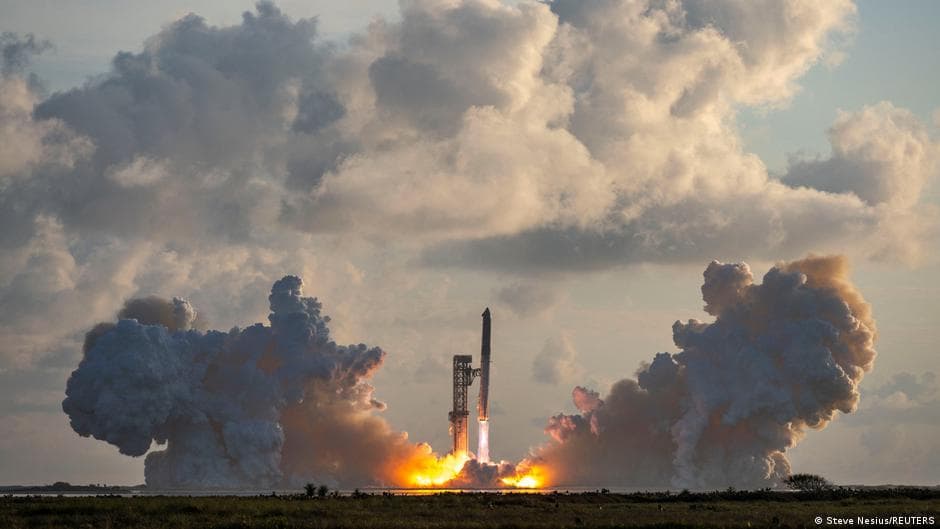
OPA WIRE, Oct 1 (OPA) — Three years after its inaugural test flight, SpaceX's Starship rocket attempted to reach Earth's orbit today, Monday, September 28. This launch marks a pivotal milestone in the development of the massive launch vehicle, which is specifically engineered for future deep-space missions to the Moon and Mars. The mission represents a significant leap forward in aerospace engineering, testing the limits of the world's most powerful rocket system as it seeks to transition from experimental suborbital flights to full orbital capability.
SpaceX, led by Elon Musk, is accelerating the development cycle of Starship following a high-profile initial public offering earlier this year. The current mission, which is expected to last approximately 10 hours, aims to deploy 26 next-generation Starlink satellites into orbit. While the launch was scheduled for 7:15 AM local time in Texas, the company remains cautious, given that several previous iterations of the test program concluded in dramatic explosions, highlighting the inherent volatility of such experimental hardware.
Since 2023, SpaceX has been refining the full configuration of Starship at its Texas facility. The company previously opted for suborbital trajectories to mitigate risks and simplify technical challenges. However, the current iteration features numerous modifications to the black-and-silver giant, which remains the largest and most powerful structure ever to fly. These design changes are critical for Musk's vision of a fully reusable launch system, a prerequisite for sustainable commercial space travel and interplanetary colonization.
The technical hurdles remain immense. To achieve its objectives, the spacecraft must reach a circular orbit at an altitude of 275 kilometers, requiring a velocity of approximately 28,000 kilometers per hour. Kathleen Kerley, a senior analyst at Georgetown University's Center for Security and Emerging Technology, noted that this phase is the most difficult, requiring precise calculations and immense power. She emphasized that the rocket must perform complex maneuvers while navigating varying gravitational forces to maintain its trajectory.
Looking ahead, success in this mission would signal a new and exciting phase for SpaceX, including future tests of orbital refueling. If the systems function as intended, the deployment of the Starlink satellites will demonstrate the practical utility of the Starship platform. Experts believe that mastering these orbital maneuvers is the final barrier to unlocking the potential for long-duration space missions, effectively changing the economics of space access for the coming decades.
Subscribe to the Global Briefing
Receive our flagship executive dispatch every morning. Essential geopolitical analysis, financial benchmarks, and breaking world events delivered to your inbox.
Mohammad Karamali
Verified Wire ContributorSenior correspondent covering geopolitics, regional developments, and strategic international affairs for OPA News (Optimum Public Affairs).
Related Stories & Follow-ups
Editorial Wire


Reader Discussion
Leave a Comment
0 Comments
Owner
Editorial Oversight & Machine-Assisted Reporting
Human-in-the-Loop VerifiedEditorial Oversight & Machine-Assisted Reporting: This dispatch was synthesized and localized via OPA automated intelligence under continuous human editorial supervision.
Wire Source
This report was synthesized from DW Persian under journalistic fair use.