
Swiss glaciers lose more than 5% in ice volume in 2026
Key Takeaways
- Swiss glaciers lost 5.5% of their ice volume in 2026 alone.
- Nearly 20% of total glacier mass has been lost over the last five years.
- Experts warn that many glaciers may disappear completely within 10 to 15 years.
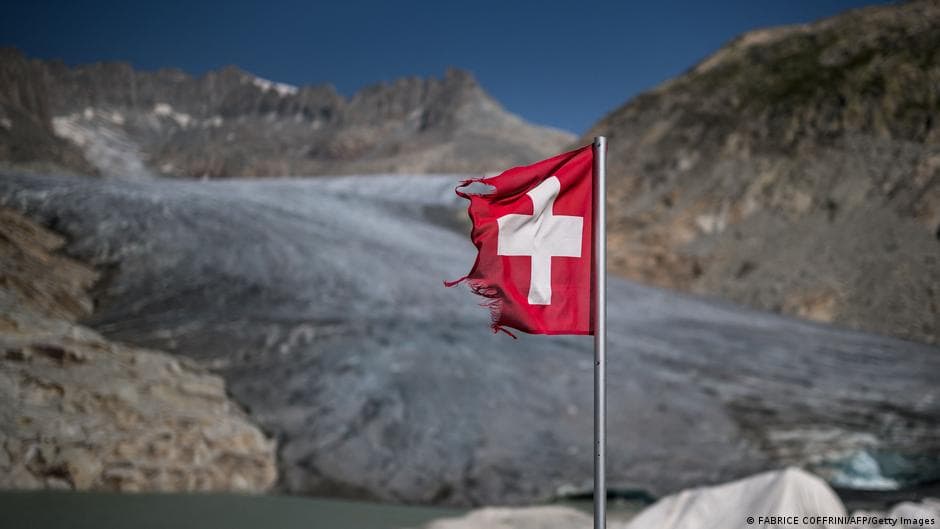
OPA WIRE, Oct 1 (OPA) — Switzerland's glaciers have suffered a catastrophic decline, losing nearly 20% of their total mass over the past five years, according to a sobering new report released this Thursday. Experts from the Glacier Monitoring in Switzerland (GLAMOS) network have confirmed that 2026 was a particularly devastating year, marked by a 5.5% reduction in ice volume, the second-largest drop ever recorded. This rapid melting is directly attributed to unprecedented heat waves that have swept across Europe, leaving the alpine landscape fundamentally altered and raising urgent alarms regarding the future of the continent's cryosphere.
Data from the GLAMOS study highlights the severity of the situation, noting that the combination of minimal winter snowfall and record-breaking summer temperatures created a perfect storm for ice loss. Matthias Huss, the chief of GLAMOS, described 2026 as a "catastrophic year" for the region. He stated, "The glaciers this year have lost enormous quantities of ice," emphasizing that the current rate of depletion is unsustainable. Official figures indicate that the cumulative loss of nearly a fifth of total ice mass in just half a decade serves as a stark metric of the accelerating climate crisis currently unfolding in the heart of Europe.
Historically, Swiss glaciers have served as a vital water reservoir for the region, regulating flow and supporting ecosystems. However, the recent trend of rapid retreat has shifted the narrative from seasonal fluctuation to long-term existential threat. The GLAMOS report underscores that the survival of these ice fields is now in serious doubt. As the glaciers shrink, the historical stability of the alpine environment is being dismantled, forcing scientists to confront the reality that the iconic landscapes that have defined Switzerland for centuries may soon be relegated to history books.
The ramifications of this melting are profound, affecting everything from local water security to the broader stability of the European climate. Communities that rely on glacial runoff for agriculture, hydroelectric power, and drinking water face increasing uncertainty as the natural storage systems disappear. Furthermore, the loss of these glaciers acts as a feedback loop, reducing the earth's albedo and further accelerating warming. Reactions from environmental groups and local authorities have been swift, calling for immediate policy interventions to mitigate the human-driven factors contributing to this ecological collapse.
Looking ahead, the outlook remains grim for the alpine region. Expert analysis suggests that without a drastic reversal in global temperature trends, many of these glaciers will vanish entirely within the next 10 to 15 years. Matthias Huss explicitly linked the current warming to anthropogenic climate change, stating that human emissions are the sole driver of this phenomenon. As Europe continues to warm faster than any other continent, the future of its ice fields depends entirely on global efforts to decarbonize, though for many glaciers, the point of no return has already been crossed.
Subscribe to the Global Briefing
Receive our flagship executive dispatch every morning. Essential geopolitical analysis, financial benchmarks, and breaking world events delivered to your inbox.
Mohammad Karamali
Verified Wire ContributorSenior correspondent covering geopolitics, regional developments, and strategic international affairs for OPA News (Optimum Public Affairs).
Related Stories & Follow-ups
Editorial Wire


Reader Discussion
Leave a Comment
0 Comments
Owner
Editorial Oversight & Machine-Assisted Reporting
Human-in-the-Loop VerifiedEditorial Oversight & Machine-Assisted Reporting: This dispatch was synthesized and localized via OPA automated intelligence under continuous human editorial supervision.
Wire Source
This report was synthesized from DW English under journalistic fair use.