
It's spring in the Southern Hemisphere and even Chile's Atacama Desert is blossoming
Key Takeaways
- Approximately 17,000 square kilometers of the Atacama Desert have bloomed, the largest event since 1997.
- Record rainfall, reaching up to 190mm in some areas, was triggered by a 'super El Niño' weather pattern.
- More than 200 plant species have emerged from dormant seeds and bulbs, some of which had been inactive for over 40 years.
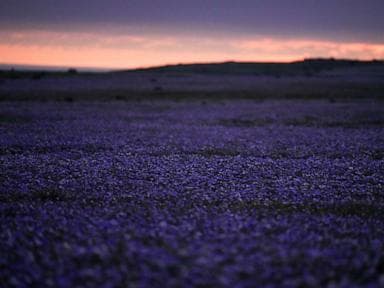
OPA WIRE, Oct 1 (OPA) — Spring has arrived in the Southern Hemisphere, triggering a rare and spectacular transformation in Chile's Atacama Desert, the driest nonpolar region on Earth. Following an unusually wet season driven by a powerful El Niño weather pattern, vast stretches of the arid landscape have erupted into a vibrant carpet of wildflowers. This phenomenon, known as the Desierto Florido or 'flowering desert,' has brought millions of dormant seeds and bulbs to life, creating a lush, colorful ecosystem where barren dunes typically dominate the horizon.
Jorge Carabantes, head of the Protected Areas Department at the National Forest Corporation (CONAF), described the event as extraordinary, noting that more than 200 plant species have emerged. Biologist César Pizarro added that the region received record-breaking rainfall, with some areas recording up to 190 millimeters of precipitation. This influx of water has activated biological material that had remained dormant for decades, with some hills seeing their first blooms in over 40 years, marking the most significant flowering event since 1997.
The Atacama Desert, situated between the Pacific Ocean and the Andes Mountains, spans approximately 1,600 kilometers along Chile's northern coast. While minor flowering can occur during seasonal transitions, the current scale is unprecedented. The heavy rains, attributed to a 'super El Niño,' have transformed roughly 17,000 square kilometers of terrain—an area comparable to the size of the Santiago Metropolitan Region—into a botanical spectacle that has captivated both local residents and international visitors alike.
This botanical resurgence has profound implications for tourism and local ecology. The National Tourism Secretariat projects nearly 300,000 overnight trips to the region by November, as travelers flock to witness the rare sight. For many, like Chilean-born Australian resident Felix Banda, the transformation is surreal, turning a landscape traditionally defined by its brown, rocky dunes into a vivid display of red, yellow, and purple flora. The influx of visitors provides a significant economic boost to the remote areas of northern Chile.
Looking ahead, experts emphasize that this event highlights the resilience of desert ecosystems and the profound impact of climate-driven weather patterns. While the 'super El Niño' caused devastation elsewhere in Chile through flooding, its role in awakening the desert's germplasm—including seeds, bulbs, and invertebrate eggs—serves as a reminder of nature's hidden capacity for renewal. As the blooms persist through November, researchers continue to study this unique biological phenomenon to better understand how these species survive in one of the world's most inhospitable environments.
Subscribe to the Global Briefing
Receive our flagship executive dispatch every morning. Essential geopolitical analysis, financial benchmarks, and breaking world events delivered to your inbox.
Mohammad Karamali
Verified Wire ContributorSenior correspondent covering geopolitics, regional developments, and strategic international affairs for OPA News (Optimum Public Affairs).
Related Stories & Follow-ups
Editorial Wire


Reader Discussion
Leave a Comment
0 Comments
Owner
Editorial Oversight & Machine-Assisted Reporting
Human-in-the-Loop VerifiedEditorial Oversight & Machine-Assisted Reporting: This dispatch was synthesized and localized via OPA automated intelligence under continuous human editorial supervision.
Wire Source
This report was synthesized from ABC under journalistic fair use.