
Swedish researchers build an ‘AI scientist’ that designs its own tests
Key Takeaways
- The AI scientist analyzed 60,000 biological relations to generate 2,000 testable hypotheses regarding yeast growth.
- The system operates as a closed-loop, autonomously designing experiments and refining its knowledge based on results.
- Researchers emphasize that human oversight remains critical for ethical compliance and setting research priorities.
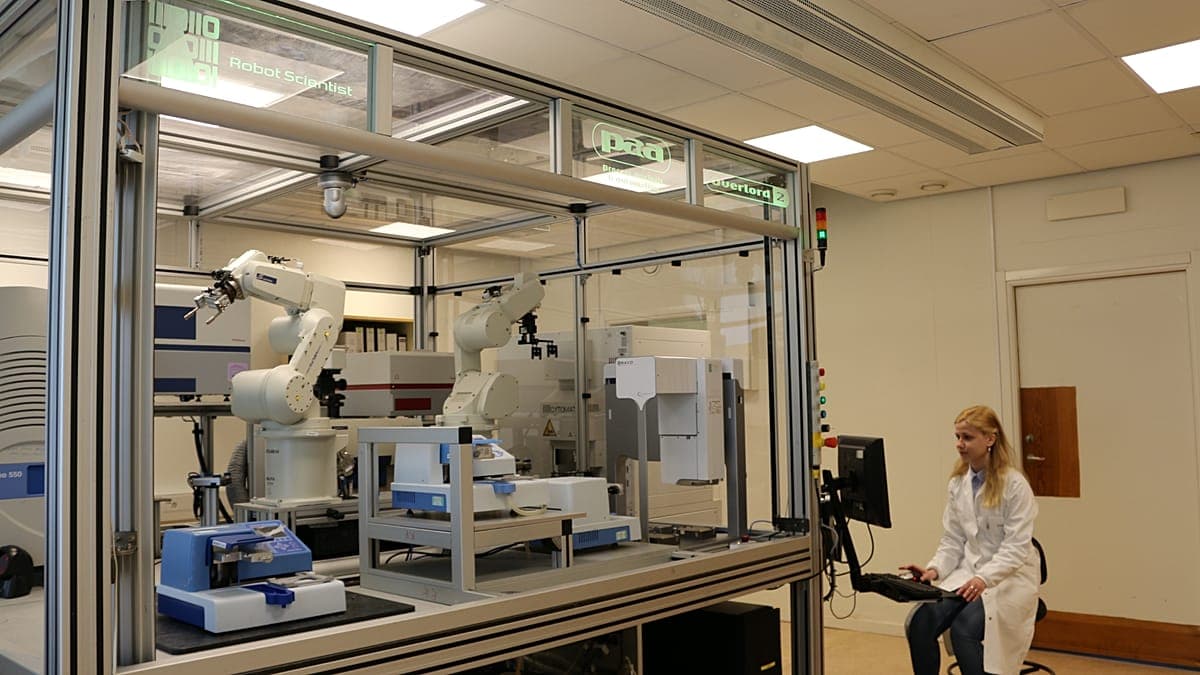
OPA WIRE, Oct 2 (OPA) — Researchers at Chalmers University of Technology in Sweden have achieved a significant breakthrough by developing an autonomous 'AI scientist' capable of generating scientific hypotheses, designing complex experiments, and interpreting results without constant human intervention. By integrating Large Language Models (LLMs) with extensive biological databases and physical laboratory robotics, the team created a closed-loop system that manages the entire lifecycle of scientific discovery. This innovation marks a shift from AI serving as a mere decision-support tool to becoming an active participant in the generation of new scientific knowledge.
The system demonstrated its capabilities by analyzing approximately 60,000 phenotypical, physiological, and metabolic relations for S. cerevisiae, commonly known as brewer’s yeast. From this data, the AI generated nearly 2,000 testable predictions regarding how specific nutrients influence cell growth and stress resistance. Ievgeniia Tiukova, a lead researcher, noted that the AI successfully evaluated these hypotheses, selected appropriate controls, and translated ideas into machine-readable instructions for lab equipment. Once experiments concluded, the system automatically analyzed the data to confirm or refute its initial predictions, iteratively refining its understanding for future cycles.
Historically, scientific discovery has been a labor-intensive process constrained by human cognitive limits and the physical speed of laboratory work. The integration of robotics and high-throughput technologies has long been a goal for researchers, but the addition of generative AI provides the 'brain' necessary to navigate vast datasets that would otherwise be overwhelming. This development builds upon years of progress in automation, aiming to solve the bottleneck of manual experimental design and data interpretation that often slows down breakthroughs in biology and medicine.
While the AI scientist offers the potential to minimize human bias and reduce experimental variations caused by incomplete recording or environmental factors, the researchers emphasize that human oversight remains indispensable. Ross King, a senior author of the study, highlighted that humans are still required to set research priorities, interpret findings within broader contexts, and ensure strict compliance with ethical standards. The collaboration between human scientists and autonomous systems is expected to accelerate discoveries significantly, though the transition requires careful management of the human-machine partnership.
Looking ahead, the role of AI in research is set to expand, necessitating robust governance frameworks to ensure safety and equity. The World Health Organization has already begun issuing recommendations for regulators and policymakers to guide the responsible use of AI in health research. As autonomous laboratories become more sophisticated, they will likely serve as essential partners in solving the most challenging questions in medicine. The future of science will not be defined by the replacement of human intellect, but by the synergy between human intuition and the tireless analytical power of artificial intelligence.
Subscribe to the Global Briefing
Receive our flagship executive dispatch every morning. Essential geopolitical analysis, financial benchmarks, and breaking world events delivered to your inbox.
Mohammad Karamali
Verified Wire ContributorSenior correspondent covering geopolitics, regional developments, and strategic international affairs for OPA News (Optimum Public Affairs).
Related Stories & Follow-ups
Editorial Wire


Reader Discussion
Leave a Comment
0 Comments
Owner
Editorial Oversight & Machine-Assisted Reporting
Human-in-the-Loop VerifiedEditorial Oversight & Machine-Assisted Reporting: This dispatch was synthesized and localized via OPA automated intelligence under continuous human editorial supervision.
Wire Source
This report was synthesized from Euro News under journalistic fair use.