
Hurricane Sandy: Storm WAS more powerful than Hurricane Katrina
Key Takeaways
- Hurricane Sandy's Integrated Kinetic Energy (IKE) was 140 Terajoules, exceeding Katrina's by 20 Terajoules.
- Sandy's total energy output was more than twice that of the atomic bomb dropped on Hiroshima.
- While Sandy was only a Category 1 storm at landfall, its massive size created widespread storm surges across hundreds of miles.
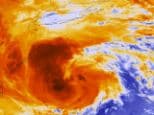
Hurricane Sandy has officially been classified as the second most powerful storm in modern history, surpassing the raw energy output of Hurricane Katrina. While Katrina is often remembered for its devastating wind speeds and catastrophic impact, researchers have determined that when measuring the Integrated Kinetic Energy (IKE)—a metric that accounts for both the intensity and the physical size of a storm—Sandy stands as a significantly larger and more energetic weather event. This finding challenges the traditional reliance on the Saffir-Simpson scale, which focuses primarily on wind speed to categorize hurricanes, often failing to capture the true destructive potential of massive, sprawling systems.
According to Brian McNoldy, a senior researcher at the University of Miami’s Rosenstiel School of Marine and Atmospheric Science, Sandy’s IKE reached an staggering 140 Terajoules. This figure is approximately 20 Terajoules higher than that of Katrina. McNoldy explains that this energy level is equivalent to more than twice the force of the atomic bomb dropped on Hiroshima. While Katrina’s energy was highly concentrated, resulting in extreme wind damage, Sandy’s energy was distributed across a much wider geographic area, allowing it to generate massive storm surges that affected hundreds of miles of coastline simultaneously.
Historically, the classification of hurricanes has been dominated by wind speed categories. Katrina made landfall as a Category 3 storm, eventually reaching Category 5 status, whereas Sandy was only a Category 1 storm upon landfall. However, the IKE metric provides a more comprehensive view of a storm's total power. Before Sandy, the record for the highest IKE was held by Hurricane Isabel in 2003. By comparing these metrics, scientists are gaining a better understanding of why Sandy caused such widespread destruction despite its lower wind-speed classification, highlighting the danger of large-diameter storms.
The ramifications of this data are profound for urban planning and emergency management along the U.S. East Coast. With Sandy causing at least $20 billion in estimated damages, the storm serves as a grim reminder that a hurricane’s threat is not solely defined by its wind speed. The sheer scale of the storm meant that highly populated regions, including New York City and surrounding areas, faced unprecedented flooding and infrastructure failure. This realization has forced meteorologists to reconsider how they communicate the risks of future storms to the public, moving beyond simple category numbers.
Looking ahead, experts suggest that the IKE metric will become an essential tool in assessing future hurricane threats. As climate patterns shift, the frequency of large, sprawling storms may increase, necessitating a more nuanced approach to disaster preparedness. The scientific community emphasizes that while wind speed remains a critical factor for structural damage, the total energy output of a storm is a better predictor of the overall flood risk and economic impact. Future emergency protocols will likely integrate these findings to ensure that coastal populations are better protected against the hidden power of massive, wide-reaching weather systems.
Subscribe to the Global Briefing
Receive our flagship executive dispatch every morning. Essential geopolitical analysis, financial benchmarks, and breaking world events delivered to your inbox.
Mohammad Karamali
Verified Wire ContributorSenior correspondent covering geopolitics, regional developments, and strategic international affairs for OPA News (Optimum Public Affairs).
Related Stories & Follow-ups
Editorial Wire


Reader Discussion
Leave a Comment
0 Comments
Owner
Editorial Oversight & Machine-Assisted Reporting
Human-in-the-Loop VerifiedEditorial Oversight & Machine-Assisted Reporting: This dispatch was synthesized and localized via OPA automated intelligence under continuous human editorial supervision.
Wire Source
This report was synthesized from Daily Mail under journalistic fair use.