
Nobel Prize in Medicine Awarded to Pioneers of Optogenetics
Key Takeaways
- Karl Deisseroth, Peter Hegemann, and Georg Nagel won the Nobel Prize in Physiology or Medicine for inventing optogenetics.
- The breakthrough technique uses light-sensitive algae proteins and harmless viruses to turn specific brain cells on and off.
- The laureates share a 12 million Swedish kronor prize as their work moves toward clinical therapies, including restoring vision.
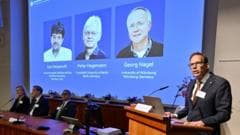
OPA WIRE, Oct 5 (OPA) — American neuroscientist Karl Deisseroth and German researchers Peter Hegemann and Georg Nagel have been awarded the Nobel Prize in Physiology or Medicine for pioneering optogenetics. The Karolinska Institute in Stockholm recognized the three scientists for establishing a revolutionary era in neuroscience. Their breakthrough allows researchers to control individual neural circuits with light, vastly improving the understanding of memory, emotion, and behavior.
The Nobel Committee praised the trio, stating that optogenetics has created a fundamental shift in understanding the human brain by deciphering circuits tied to psychiatric and neurological conditions. Per Svenningsson, chair of the Nobel Committee for Physiology or Medicine, noted that optogenetics provides brain-mapping opportunities that were once only a dream. The laureates will share a cash prize of 12 million Swedish kronor, roughly £900,000.
Optogenetics relies on light-sensitive proteins called opsins, originally identified in algae. In the early 2000s, Hegemann and Nagel discovered channelrhodopsin, while Deisseroth devised a method to insert these algal proteins into mammalian neurons using harmless, genetically engineered viruses. When exposed to specific wavelengths of light, the opsins alter the electrical charge across the cell membrane, effectively turning targeted neurons on or off on demand.
Beyond basic research on Parkinson's disease and depression, the technology is moving toward direct clinical applications. Clinical trials are already exploring optogenetics to partially restore sight in patients suffering from retinitis pigmentosa. By transferring algal genes into surviving retinal cells and using specialized light-emitting goggles, researchers are successfully stimulating optical pathways, paving the way for groundbreaking optical and neurological therapeutics.
Subscribe to the Global Briefing
Receive our flagship executive dispatch every morning. Essential geopolitical analysis, financial benchmarks, and breaking world events delivered to your inbox.
Mohammad Karamali
Verified Wire ContributorSenior correspondent covering geopolitics, regional developments, and strategic international affairs for OPA News (Optimum Public Affairs).
Related Stories & Follow-ups
Editorial Wire


Reader Discussion
Leave a Comment
0 Comments
Owner
Editorial Oversight & Machine-Assisted Reporting
Human-in-the-Loop VerifiedEditorial Oversight & Machine-Assisted Reporting: This dispatch was synthesized and localized via OPA automated intelligence under continuous human editorial supervision.
Wire Source
This report was synthesized from BBC Persian under journalistic fair use.