
Nobel Prize in Medicine Awarded to Optogenetics Pioneers From Germany and United States
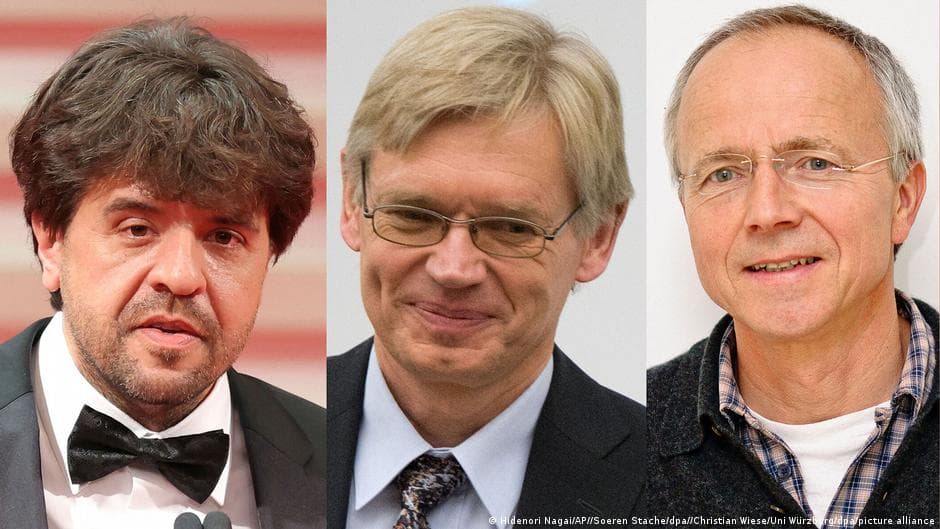
Key Takeaways
- German scientists Peter Hegemann and Georg Nagel and American Karl Deisseroth won the Nobel Prize in Medicine for developing optogenetics.
- The breakthrough allows neuroscientists to control specific neuronal activity using light-sensitive channelrhodopsin proteins.
- The 12 million Swedish kronor prize will be shared equally among the three researchers ahead of the December 10 award ceremony.
OPA WIRE, Oct 6 (OPA) — The Nobel Assembly at the Karolinska Institute awarded the 2026 Nobel Prize in Physiology or Medicine to German researchers Peter Hegemann and Georg Nagel alongside American scientist Karl Deisseroth. The prestigious honour was bestowed in recognition of their pioneering discoveries concerning light-sensitive ion channels and the subsequent development of optogenetics, an innovative technique enabling researchers to manipulate neuronal activity using focused light.
Optogenetics leverages light-activated proteins known as channelrhodopsins, identified by Hegemann of Berlin's Humboldt University and Nagel of the University of Würzburg, to precisely regulate ion flow across cellular membranes. Stanford University researcher Karl Deisseroth integrated these light-sensitive proteins into neurons, demonstrating that optical stimulation could selectively activate or suppress specific neural cells. The award carries a cash purse of 12 million Swedish kronor, distributed equally among the three laureates.
The Nobel Assembly commended optogenetics for fundamentally transforming modern neuroscience by allowing researchers to map distinct neural circuits with unprecedented spatial and temporal precision. By tracing brain pathways, scientists have pinpointed specific cellular networks associated with critical behavioral phenomena and neurological disorders, including fear, anxiety, addiction, and acute pain mechanisms.
While currently functioning predominantly as a fundamental research tool, optogenetics holds significant clinical promise for pioneering novel treatments targeting severe brain conditions. Active experimental inquiries continue exploring therapeutic applications for Parkinson's disease, major mood disorders, and degenerative retinal conditions. The formal presentation ceremony will take place in Stockholm on December 10, the anniversary of Alfred Nobel's death.
Subscribe to the Global Briefing
Receive our flagship executive dispatch every morning. Essential geopolitical analysis, financial benchmarks, and breaking world events delivered to your inbox.
Mohammad Karamali
Verified Wire ContributorSenior correspondent covering geopolitics, regional developments, and strategic international affairs for OPA News (Optimum Public Affairs).
Related Stories & Follow-ups
Editorial Wire


Reader Discussion
Leave a Comment
0 Comments
Owner
Editorial Oversight & Machine-Assisted Reporting
Human-in-the-Loop VerifiedEditorial Oversight & Machine-Assisted Reporting: This dispatch was synthesized and localized via OPA automated intelligence under continuous human editorial supervision.
Wire Source
This report was synthesized from DW Persian under journalistic fair use.