
The History of Josephine Cochran and the Invention of the Dishwasher
Key Takeaways
- Josephine Garis Cochran received U.S. Patent No. 355,139 for her mechanical dishwasher design in 1886.
- Cochran established her own manufacturing company after traditional industrial manufacturers dismissed her technical designs.
- Her commercial dishwasher model was showcased at the 1893 World's Columbian Exposition in Chicago.
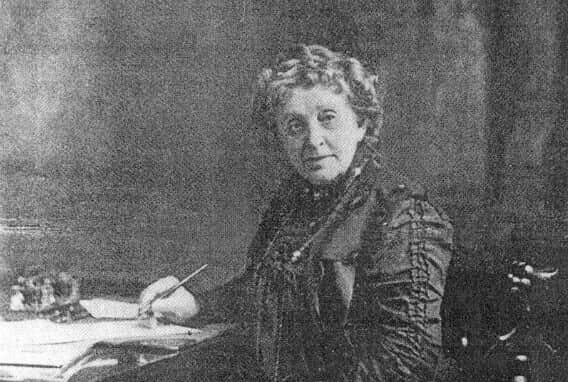
TEHRAN, Nov 7 (OPA) — Josephine Garis Cochran was born on March 8, 1841, in Ohio, demonstrating an early aptitude for technical problem-solving. Constrained by limited educational opportunities for women in engineering during the 19th century, she pursued practical solutions to household frustrations. After marrying William Epperson Cochran in 1858 and settling in Shelbyville, Illinois, she grew increasingly frustrated by the time-consuming and destructive task of washing dishes by hand, which frequently resulted in chipped or broken heirloom china. Following her husband's death in 1883, Cochran faced significant debt and limited financial resources, transforming her domestic frustration into a commercial imperative.
Working alongside mechanic George Butters, Cochran developed a prototype utilizing wire compartments inside a rotating copper wheel that sprayed hot soapy water onto stationary dishes. She filed for a patent in 1885 and secured U.S. Patent No. 355,139 in 1886. Reflecting on the lack of male mechanical support in the industry, Cochran famously stated according to the National Inventors Hall of Fame: "If nobody else is going to invent a machine to wash dishes, I'm going to do it myself." When traditional manufacturers dismissed her technical expertise due to her lack of formal university training, she established her own manufacturing business, the Garis-Cochran Manufacturing Company, to produce the commercial units directly.
Cochran initially targeted businesses with high-volume dishwashing needs, such as hotels, large restaurants, hospitals, and universities. Her large-scale model could wash and dry approximately 240 dishes in two minutes. The invention gained widespread attention after being displayed at the 1893 World's Columbian Exposition in Chicago, where it received an award and subsequent exhibition placements across Massachusetts, New York, and Missouri. However, consumer market adoption remained slow due to inadequate residential infrastructure, as most 19th-century homes lacked water heaters capable of supplying the necessary volume of hot water and reliable plumbing.
Decades later, as residential infrastructure modernized, widespread access to hot water and advanced detergents facilitated the integration of dishwashers into domestic kitchens. Cochran's manufacturing enterprise eventually merged into the KitchenAid portfolio, which released its first home dishwasher based on her design in 1949, the KD-10 model. Cochran maintained active supervision over the production, sale, and installation of her inventions throughout her career, securing multiple design improvements before her death on August 3, 1913, thereby cementing her legacy in industrial design.
Subscribe to the Global Briefing
Receive our flagship executive dispatch every morning. Essential geopolitical analysis, financial benchmarks, and breaking world events delivered to your inbox.
Mohammad Karamali
Verified Wire ContributorSenior correspondent covering geopolitics, regional developments, and strategic international affairs for OPA News (Optimum Public Affairs).
Related Stories & Follow-ups
Editorial Wire

Reader Discussion
Leave a Comment
0 Comments
Owner
Editorial Oversight & Machine-Assisted Reporting
Human-in-the-Loop VerifiedEditorial Oversight & Machine-Assisted Reporting: This dispatch was synthesized and localized via OPA automated intelligence under continuous human editorial supervision.
Wire Source
This report was synthesized from Khabar Online under journalistic fair use.